

In the constantly changing realm of corporate security, businesses are always evaluating the most effective strategies to safeguard their personnel, assets, and information. There is often a belief that transitioning from contract security to in-house security will be more cost-effective and that the business will have a security team customized to their specific requirements. Let’s examine that perspective.
Expertise and Specialization
Contract security services offer specialized expertise, which is a significant advantage. These firms focus solely on security, so they have extensive experience and knowledge that in-house security teams may lack. They invest heavily in training, licensing, and staying updated on the latest security threats. This enables them to provide highly trained personnel capable of handling various security challenges. Additionally, a good contract security provider can customize security solutions based on specific business needs and have dedicated personnel stationed on-site. In contrast, building an in-house security team requires a significant investment in training and development.
Cost Efficiency
Cost is a crucial factor for any business decision, and contract security often has an advantage here. Hiring security services through a contract can be more cost-effective than maintaining an in-house team. In-house teams come with additional costs like salaries, benefits, training, uniforms, and equipment. With contract security, businesses can negotiate terms that fit their budget while avoiding the costs associated with full-time employees. Contract security providers also take on the risks and costs associated with any incidents, potential claims, or liabilities.
Flexibility and Scalability
Contract security services offer businesses flexibility by adjusting security presence based on current needs or threats, while in-house teams may struggle due to fixed staffing levels and slower response times for recruitment and training. This difference can lead to potential gaps in protection during transitional periods.
Technology and Innovation
Staying at the forefront of security technology is paramount in today’s environment. Contract security firms have the resources to invest in cutting-edge technology, such as AI-empowered scheduling systems and workforce management tools. These firms continuously update their technological capabilities to meet evolving threats, providing clients with state-of-the-art security solutions.
In-house security teams, unless part of a large organization with substantial resources, may struggle to keep up with technological advancements thus hindering their effectiveness.
Accountability and Performance
Contract security firms operate under service-level agreements (SLAs) that outline performance standards and accountability measures. These contracts provide businesses with clear expectations and recourse if standards are not met. The competitive nature of the security industry also drives contract firms to maintain high-performance levels to retain clients.
In conclusion, both contract security and in-house security offer distinct advantages, and the best choice depends on the specific needs and resources of the business. Keep in mind that contract security provides expertise, cost efficiency, flexibility, advanced technology, and accountability, making it an attractive option for many companies.
If you’re looking for a job that has meaning and allows you to assist and protect others, you might consider becoming a Security Officer or security guard. Security Officers work in a wide range of sectors, from the government to education to retail. They have the essential role of protecting the people and property at a specific location.
Many Security Officers have a background in law enforcement or have military training, but not all do. If you’re interested in learning how to become a security guard, you’ll need to consider the characteristics that many Security Officers possess and the skills you should develop to succeed on the job.
How to Become a Security Officer
The requirements for a Security Officer vary slightly from state to state. They also differ based on whether a Security Officer will be armed or unarmed. If you are interested in pursuing a career as a security guard, consider the general requirements for most positions:
1. Basic Requirements
There are some basic requirements a person needs to meet before they can apply for a security guard position in the U.S. For the most part, you’ll need to be eligible to work in the U.S. That means you need to be a citizen or otherwise have the appropriate documentation stating that you are allowed to hold a job in the country.
Most jobs have a minimum age requirement, as well. To apply for a position as an unarmed Security Officer, you should be at least 18-years-old. Armed security guard positions require a person to be at least 21-years-old. You’ll also need to be able to write, read, and speak English fluently. Ideally, you’ll also have a reliable method of getting in contact with your employer, such as a mobile phone or email address.
2. Education
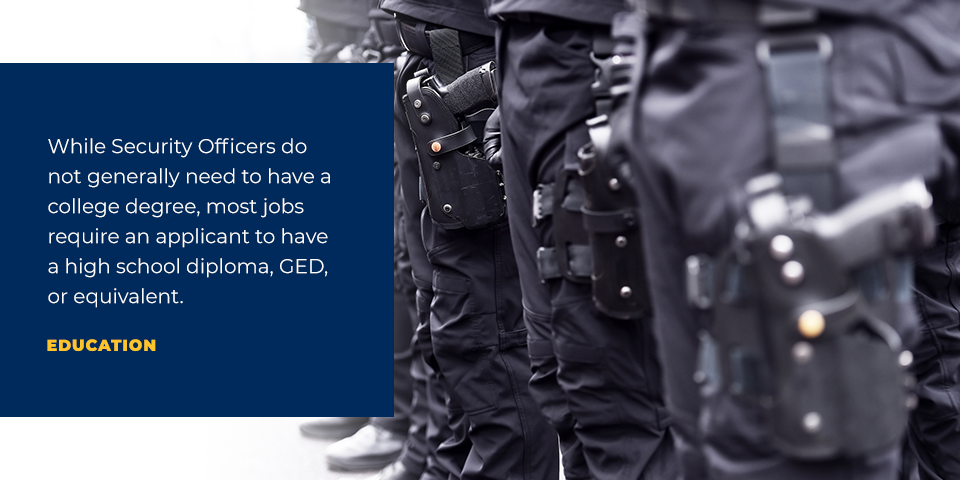
While Security Officers do not generally require to have a college degree, most jobs require an applicant to have a high school diploma, GED, or equivalent. The specific training requirements to become a Security Officer vary from state to state.
For example, in California, aspiring security guards need to take a skills training course before they earn certification. The course covers a variety of topics, from terrorism awareness to observing suspicious activity. Washington state also requires security guards to complete pre-assignment training before they can receive a license. The training covers the role of a security guard, observation techniques, terrorism awareness, and the proper way to take action and react in specific circumstances.
Although the exact length of your training will vary based on your location, you can generally expect to undergo eight hours of training before you start a job, up to 16 hours of training on-the-job, and an additional eight hours of continuing education each year.
If you’re interested in becoming an armed Security Officer, you will likely need to complete additional training. A weapons permit is also a requirement for armed Security Officers.
3. Physical Health
You don’t need to be in the best shape of your life to succeed as a Security Officer, but it is important that you be in good overall health and physically capable of performing the demands of the job. Many Security Officer positions require you to be on your feet for several hours at a time. For example, you might need to walk frequently to patrol different areas of a business. In some cases, you might need to run to catch a shoplifter.
4. Background
A background check is part of the application process for becoming a security guard. Your employer will want to verify that you are who you claim to be. The background check will most likely include a criminal background check as well as a motor vehicle records check and a credit check. Many positions also require pre-employment drug screening.
If you are applying to be an armed Security Officer, you can expect an even more rigorous and thorough background check compared to if you were applying to be an unarmed Security Officer. You might need to agree to be fingerprinted for an armed guard position.
5. License and Certification
Whether you need to have a license or certificate to be a Security Officer depends on the state where you plan on working. In some states, you should have your certificate or license before you apply for a job. In others, you are granted a certificate after you receive a job offer, provided you meet the training and any other requirements.
Security Office Career Statistics
As of 2018, 1,154,300 individuals were employed as security guards in the U.S. The Bureau of Labor Statistics expects the opportunities for Security Officers to grow by about 4% over the next 10 years, meaning there should be an additional 40,600 positions available by 2028. Job prospects for an aspiring security guard should be good, due to an increase in the number of positions and to people leaving the field.
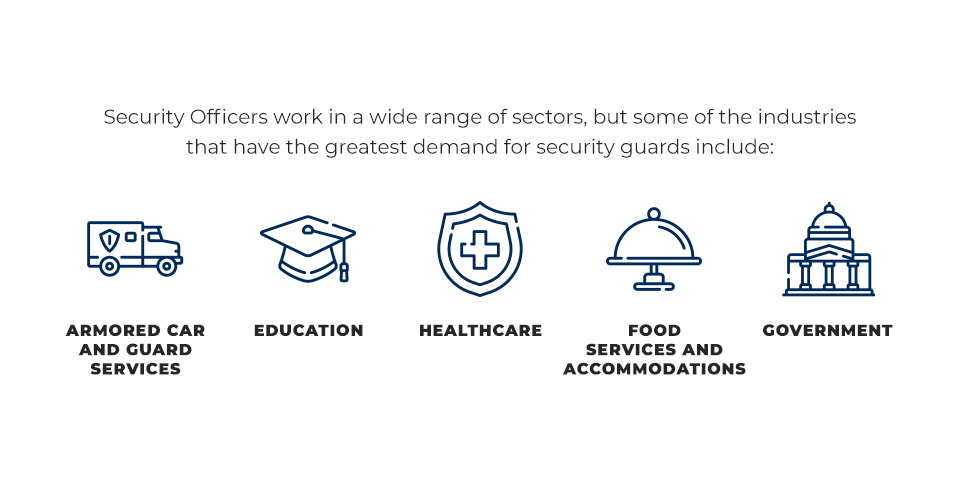
Security Officers work in a wide range of sectors, but some of the industries that have the greatest demand for security guards include:
- Armored car and guard services
- Education
- Healthcare
- Food services and accommodations
- Government
In 2019, the median salary of a security guard was $34,730. However, the amount you can earn as a Security Officer depends in large part on the sector you work in and your experience. Officers who work for the government tend to have the highest salaries, while salaries are often lower for guards who work in food service or for armored car services.
What Makes a Great Security Officer?
Not everyone is cut out to be a Security Officer. Some people are better suited for the career than others. You can learn many of the skills and develop the traits needed to excel as a security guard, though. Knowing what it takes to become a top-notch security guard can help you better prepare for the role or can help you decide if the career is a good fit for you.
Security Officer Traits
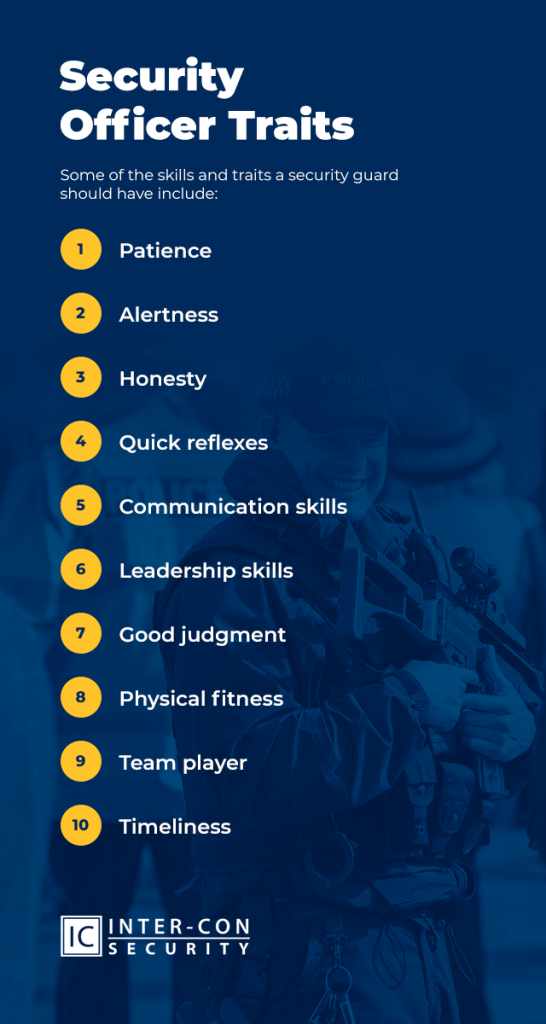
Some of the skills and traits a security guard should have include:
- Patience: Although there are occasional bursts of activity and excitement during the course of a Security Officer’s shift, much of the time on the job is spent quietly observing your surroundings. Being patient is also essential for managing your response to clients and customers while on the job. If someone becomes belligerent or rude, you should remain calm and collected.
- Alertness: Whether your job requires you to observe people coming into and exiting a building, keep watch on the exterior of a building, or monitor surveillance video, you need to be able to stay alert and to note anything out-of-the-ordinary or suspicious. If you get drowsy when sitting or standing still or tend to become distracted easily, the job of a Security Officer might be more challenging for you.
- Honesty: Honesty is the best policy to have as a Security Officer. That means you are willing to tell the truth in any situation, even if it makes you look irresponsible. Along with being honest, it’s essential that you be unbiased and able to treat everyone the same, no matter their perceived background or social standing.
- Quick reflexes: As a Security Officer, your workday might be slow and uneventful for the most part, with periods of rapid activity or bursts of action. When a situation comes up, you need to be able to think fast and react quickly and accurately. You should be able to quickly take stock of a situation and decide how to respond appropriately, rather than making rash decisions that could cause someone to get hurt.
- Communication skills: Great Security Officers are excellent communicators. A security guard should have a combination of excellent verbal and written communication skills. They are able to explain the details of a situation to their supervisors or the police when needed. If they are involved in a tense situation, they need to be able to communicate with the participants to help defuse the situation. Even when nothing significant happens on the job, a security guard will usually need to submit a written report at the end of each shift.
- Leadership skills: Even if a Security Officer is not working in a supervisory position, there might be times on the job when they are required to take charge or to lead other members of their team. A security guard should know when to tell their team what to do and how to be lead a team during a challenging situation. They should be able to motivate others to take the appropriate action and should be able to delegate tasks equitably.
- Good judgment: Good judgment is another must-have for a security guard to have, particularly if they are an armed Officer. They should be able to gauge when it is appropriate to draw or use their weapon and when other methods will be more effective.
- Physical fitness: A Security Officer doesn’t need to spend all of their off-duty time at the gym, but they should take their physical fitness seriously. Depending on the requirements of the job, they might need to be able to move quickly, lift heavy loads, or stand for hours on end.
- Team player: In addition to being able to step up and lead when needed, an excellent Security Officer should be a team player who knows when to step aside and let others lead. They should be willing to work with other guards on a shift to come up with the best plan for protecting the company or area they are securing.
- Timeliness: Many facilities need protection around-the-clock, so security guards often work in shifts. Being on time is a valuable trait in security guards, as they will most likely be relieving another team member from their shift. Timeliness also shows that a person takes their work seriously, that they respect others, and that they are willing to show up when needed.
How to Be a Great Security Officer
Along with having the traits and skills needed to be a Security Officer, knowing how to apply those skills on the job will help you excel. Here are some tips for how to be a security guard:
- Learn to listen and observe: Being observant doesn’t come naturally to all people, but it is something you can learn to do. Part of being observant includes minimizing distractions. For example, when you’re talking to another person, or are taking a walk in your neighborhood, put your smartphone away. Really pay attention to what’s around you. As you build up your observation skills, you can take notes on what you see. Eventually, noticing things that are unusual will become second nature.
- Think before you act: As a security guard, you’ll need to act quickly and respond appropriately in a variety of situations. Although time is of the essence, it’s still vital that you think before you take action to avoid causing harm to others or making a dangerous situation worse.
- Be ready to keep learning: You’ll complete training before you begin work as a Security Officer and will most likely be trained on the job. However, you’ll also want to keep learning throughout your career. That can involve completing additional training courses or continuing education programs in security and law enforcement. It might also mean finding a way to broaden your skills, such as by learning about data security or active shooter response.
- Stay in shape: Being in shape will help you perform your best on the job, both physically and mentally. When you’re in shape, you’ll be able to meet the physical demands of the role. You might also notice that you’re able to think more clearly and make decisions more readily when you’re in shape. In addition to exercising, staying in shape can mean eating a healthy diet and making sure you get enough sleep each night.
- Keep tabs on your community: Staying connected to your community and being aware of any concerns or potential situations in your local area will allow you to be more alert on the job. If you know what the risks are, you’ll be better prepared to respond to them, should they occur while you are on the job.
Start Your Security Career With Inter-Con
Inter-Con Security has become one of the world’s largest security companies and currently employs thousands of people in the U.S. and across four continents. If you’re interested in joining our team or learning more about a career as a Security Officer, visit our careers page to learn more about our openings. We are frequently hiring unarmed and armed Security Officers for security guard positions in multiple locations. Read more about our open positions and submit your application today.
Your company will not survive if it’s not a safe place to be, no matter how impressive the inventory is. For anyone to want to shop or work at your business, your facility needs to make people feel secure and comfortable.
Protecting your facility and those who work with you is so important that it may seem overwhelming at times. You can’t constantly be patrolling the grounds yourself while managing the business, but you can’t trust just anyone to look out for your company with as much care as you would. So, how can you guarantee the safety of your company without personally overseeing security measures every day?
To keep their employees safe and protect their company’s property and reputation, more and more businesses have been hiring professional security guards. Though it’s already a multi-billion dollar industry, the private security sector is projected to keep growing. Why has the private security sector suddenly taken the world by storm? Keep reading to discover the many benefits of security guards and how you can take advantage of this service for your company.
When to Use Security Guards
Most corporations and organizations would benefit from some added security measures, but there are some facilities where having a professional security guard on-site is crucial to maintaining a safe environment and staying in business.
If any of the following descriptions apply to the place you are in charge of, now is the time to consider hiring professional security guards:
- Your business is located in a high-crime area: Facilities located in a high-crime region need a professional security guard to protect them from theft and signal to potential visitors that they’re a safe place within the area.
- You deal with expensive equipment: Businesses with valuable machinery like a construction company need a professional security guard to watch over the items stored on their grounds at night and on the weekends.
- Your employees are extremely busy: It’s a good idea for anywhere fast-paced, such as a hospital, to have a security guard watching for dangerous activity that might go overlooked by employees focused on completing their work duties quickly.
- You sell luxury retail items: Retailers that sell high-end products often rely on security guards to deter thieves, monitor suspicious activity, and keep store lines orderly.
- You offer financial services: Because of the money held at their buildings, banks and other financial institutions need security guards to provide extra surveillance and protection from potential workplace violence.
- You manage an industrial factory: Manufacturing companies tend to be frequent targets of vandalism and theft, but a professional security guard can keep track of who enters the property and verify visitors.
- You serve alcohol: Anywhere that offers alcohol should be prepared to handle a potentially violent outbreak. These establishments should have security guards on hand to break up fights and prevent property damage.
- You oversee a residential community: With a professional security guard on duty, residential community members can relax knowing that trespassing or safety issues will be handled properly. Hotels can benefit from the safe environment created by security guards, too.
What to Consider When Choosing a Security Company
Choosing a security company is a big decision, and you want to be careful to find a service that you know will do a superb job of protecting your organization. To make sure you get the best value of security services possible, consider the following aspects when deciding which security company to hire:
- Focus on security only: Choose a company that provides security services and security services only. A security company shouldn’t be dividing its attention or assets among any other types of services. To get the best service possible, pick a company solely focused on security services.
- Balance your budget: Although there should be no compromise on quality when looking to secure the safety of your facility, do keep in mind the size of both your building and budget. Your needs might not require the most expensive services available, so consider whether there are any extra measures you could go without.
- Perform background checks: Explore the background and experience of a security company before hiring it. Look into how their security guards are trained and whether their level of training is up to your standards. Also, make sure the security company itself is credible and not prone to making mistakes — you want your security guards to be helpful, not a liability.
- Consider performance history: Review the performance history of the company you’re considering. Learn from previous customers’ experiences, so you don’t make their same mistakes.
- Make sure you feel secure: Ultimately, make sure you are using a security service that you can trust. Doing a background check on a company and reading its reviews will help in this process, but listen to your intuition after interacting with representatives of the company and pay attention to whether they make you feel at ease. When in doubt, go with your gut.
Why Should You Use Professional Security Guards?
There are many benefits to using security guards at your facility. If you take the time to find the right company and perform the proper research, you’ll be sure to find a good fit. Here are a few reasons why you should consider security guards:
1. Minimize Loss
Hiring a professional team of security guards deters many types of crime, including assault, vandalism, and theft, which severely damage an organization’s reputation. If your business deals with high-end merchandise, professional security guards are key to deterring crimes that could impact your company’s finances and standing.
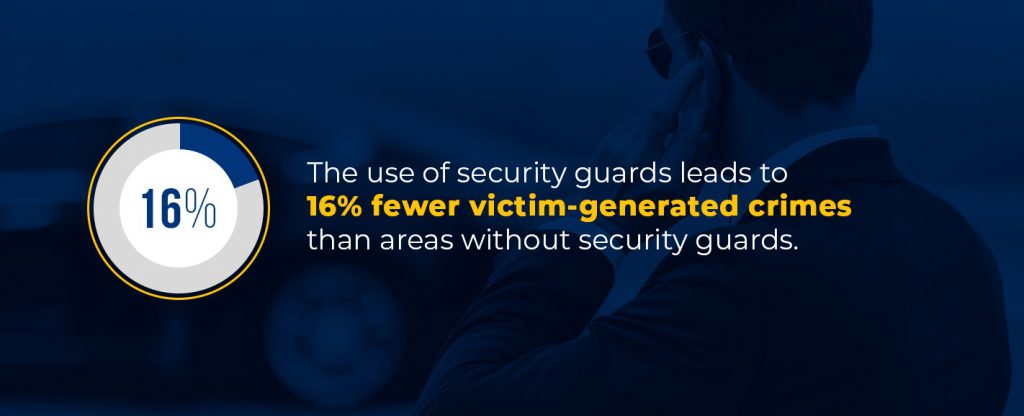
Research has shown that the use of security guards leads to 16% fewer victim-generated crimes than areas without security guards, meaning that having security guards protects your business from negative publicity. The mere presence of a security guard team will discourage criminals from targeting your facility and demonstrate that your corporation is safe and trustworthy. But if an incident does occur, security guards will be able to assist the law enforcement agencies in solving the case by providing video surveillance footage and reporting anything suspicious they noticed. This can lead to your items being recovered quicker and can minimize the disruption to your business.
2. Resolve Security Issues
Should a security threat arise, a team of security guards is your first line of defense against the issue. There is no time to second guess or hesitate during an unlawful invasion or crime on your company’s campus. That is when you need a highly skilled, trained security guard to take charge by responding quickly and efficiently.
Professional security guards know how to assess for safety risks, prevent suspects from getting away, interview witnesses, and secure victims. More than anyone else, a security guard is equipped to handle breaches of security and protect your company. Additionally, security guards will be able to assist you in preparing a loss prevention report if necessary.
3. Gain a Sense of Security
The mere presence of a trained security guard team gives people a greater sense of security and protection. Your staff and customers will all feel more cared for if there is a security guard on duty. This means that workers will be able to relax more and perform better on the job without having to worry about their personal safety. Creating this safe environment will boost your employee retention rate and increase the number of customers willing to work with you.
4. Get Help Faster
Instead of waiting for the police to arrive after calling about an emergency, have a security guard on the job to ensure the fastest response possible during a dangerous situation. While the police are driving to the scene, a security guard can monitor the threat and keep it under control. By keeping the incident contained, the damages can be kept to a minimum, and further injuries may be prevented.
5. Improve Peace of Mind
Being entrusted with the safety of others is a big responsibility that can be stressful. There is no way for you to constantly be monitoring the security of your facility while effectively doing your job. By hiring a professional security guard to be in charge of surveillance, you can rest assured that someone is vigilantly watching out for anything of potential concern.
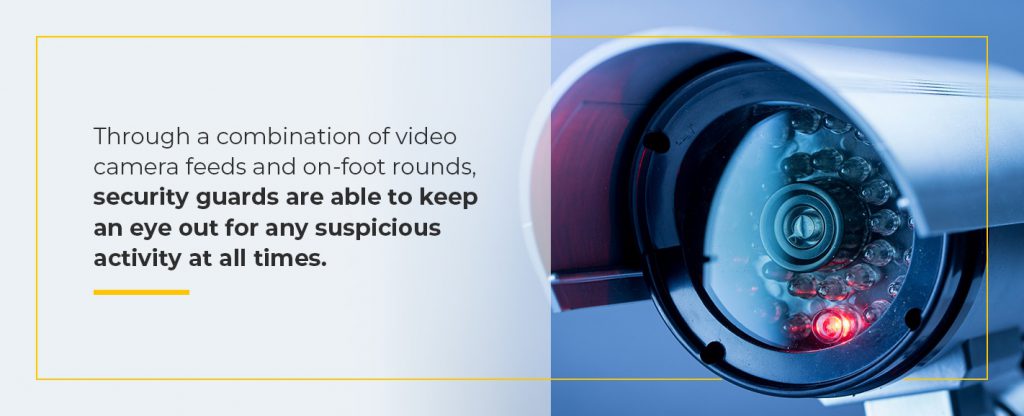
Through a combination of video camera feeds and on-foot rounds, security guards are able to keep an eye out for suspicious activity at all times. With trained professionals on the job, you will be able to trust that your grounds are being well protected, freeing you to focus on other matters.
6. Assist Customers
Security guards must know every inch of a property to adequately guard it, meaning they can be of great help to any customer searching for a certain department or product. At night, security guards can also escort customers who feel uneasy walking through the parking lot alone. In this sense, security guards do double duty and allow you to save on hiring extra workers to do similar tasks.
7. Maintain Order
Security guards can be counted on to maintain order during times of unrest. For example, if there is ever a strike at your company, a security guard would be able to protect your staff or anyone else in danger during the demonstrations. If there is ever a violent outbreak, a security guard would know how to assess the threat and deter crimes. This quick thinking would protect your employees’ lives and minimize further production delays or delivery setbacks.
Professional security guards can also help you maintain order by managing crowds when necessary. During certain special events or times of the year, your business may be more prone to rowdy groups of customers, which could escalate to crowd crushes, mob fights, or riots. A security guard would protect your workplace by keeping these disorderly instances to a minimum and mitigating their effects.
8. Build Your Brand
It may come as a surprise that professional security guards can be an asset to your branding campaign. One way to incorporate security guards into your brand is to outfit them in your company’s uniform. This will keep your brand on customers’ minds and encourage them to associate your brand with positive things, like safety and security.
Keeping everything on brand, including your security guard team, will build your company’s reputation and elevate your brand.
Why Use Professional Security Guards vs. Hiring Internally?
After deciding that your facility would benefit from additional security, you still have to choose whether to use a third-party security company or hire a security guard from within your company. Although hiring internally might seem like a quick and easy solution, the benefits of employing a professional security guard far outweigh appointing a current employee to oversee security.
Here are the top three reasons to use professional security guards:

1. Work With the Best
Hiring a professional security guard is more beneficial than hiring internally because it will give you peace of mind that your facility is protected by a qualified individual. Although you should do your homework on the security service you choose, it is standard practice for security companies to run basic background checks on all their security guards. This means that you can rest assured, knowing you will be enlisting a cleared professional.
If you plan on hiring an armed security guard, the background check for them will be even more extensive and include an FBI background check. Because they are entrusted with weapons, armed guards must have no criminal record and pass fingerprint as well as state of mind tests to be legally allowed to carry a gun. These extra precautions are set in place so that you don’t have to worry about hiring anyone unfit to serve.
2. Get Better Protection for Less
Going through a third-party private company to employ a professional security guard is less expensive and more effective than hiring internally. By choosing to hire a professional security guard from an outside source, you’ll save money you would have had to spend training novice security guards and maintaining their certifications and skills. Keeping your security guards well-equipped can contribute to administrative costs and consume resources.
Aside from the financial advantages of hiring security guards from a reputable company, you will get the added benefit of having an experienced professional protecting your business. Typically, the trained security guards that are available for hire from a private security company come from a rich background of security work. Whether it be years as a professional security guard or previous experience as a military officer, you can be certain that the security guard you hired has the necessary skills to protect your facility.
3. Customize Your Security
Each agency, business, and organization has a unique set of security needs that requires a custom plan of protection. A quality security service company will be able to incorporate their professional security guards into your business place with minimal disruption. By working with you, your team of security guards will be able to come up with several security tactics tailored to your company’s specific needs while addressing any special challenges your facility may pose.
Through collaborating on this custom plan of protection, you will develop a relationship with your security guard team and naturally build up mutual trust.
Contact Inter-Con Security Today
Your company’s security is nothing to be considered lightly. That’s why Inter-Con Security has dedicated itself to the mission of supporting its clients in a way that is completely tailored to their needs.
To accomplish this goal, Inter-Con Security offers expert security, total monitoring, and solutions tailored precisely to your facility’s needs. At Inter-Con Security, we only employ Physical Security professionals who know how to safely handle various equipment in all situations. Our Solution Design Team will work with you to develop the best course of action for your company.
Inter-Con Security has the resources of a top-tier security company while being small enough to accommodate clients’ individualized requests. Our account managers continuously monitor the risks your company may face and provide rapid responses in emergency situations through our global network of offices, command centers, and reserve forces.
If you want to ensure your company is under the best protection possible and give yourself peace of mind, contact Inter-Con Security today.
What would your business do if a major disaster were to strike? It’s estimated that around one-quarter of businesses would be unable to reopen following a disaster. Although you might not want to consider the possibility of a hurricane, pandemic, security breach, or another type of catastrophe occurring, it pays to be prepared. One way to prepare yourself and your business for any type of emergency is by creating a disaster preparedness plan.
Your company’s disaster preparedness plan should focus on emergency situations that your company is likely to face or that pose a plausible risk to your business. Ideally, the plan will include steps to take in the event of an emergency, as well as steps to take to rebuild and get your company back in operation afterward. Whether you’re about to start a new company or have an existing business that doesn’t have any sort of emergency plan, here’s what you can do to get started.
Why Your Business Needs an Emergency Preparedness Plan
Why should your company create an emergency plan? The primary reason is that disasters and emergency situations happen. Having a plan in place that allows you and your employees to respond quickly and appropriately in an emergency can make a big difference to the fate of your business. Even if the risk of something occurring seems small, it always pays to be prepared.
Benefits of an Emergency Preparedness Plan
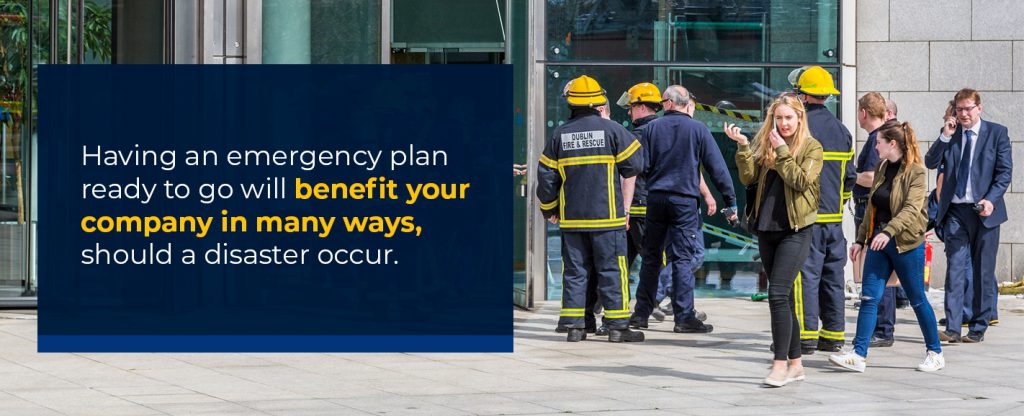
Having an emergency plan ready to go will benefit your company in many ways, should a disaster occur. Here are some of the benefits of an emergency preparedness plan:
- Provides guidance on how to respond in the moment: In an emergency or otherwise challenging situation, it can be difficult to decide what to do or how to respond. When your company has a plan, guesswork is taken out of the equation. Everything is mapped out in advance, and roles are assigned to specific individuals, so that people know exactly what to do if a hurricane strikes, a violent intruder arrives, or a major public health disaster occurs.
- Offers your employees protection: Where would your business be without its employees? Creating an emergency plan allows you to protect the people who matter most to your company: your employees. The plan can include directions for them to shelter-in-place, provide guidance on what to do if they need to quickly evacuate, or set up a chain of communication in case information needs to be shared immediately.
- Allows you to make the right preparations: Emergency plans aren’t one-size-fits-all. You can and should custom fit your company’s plan to your business. Focus on creating a response to the situations that are more likely to affect your business. If your company is based in an area that sees a lot of hurricanes throughout the year, then it’s vital that you have a plan in place to respond in case of a hurricane. Companies in areas that don’t see a lot of or any hurricanes are most likely better off focusing on other types of situations, such as what to do in the event of a tornado or a public health crisis.
- Helps your business recover more quickly: Although they can be separate, a business continuity plan is often part of an emergency preparedness plan. With a business continuity plan, your company has a map to guide it as it moves forward and gets back on its feet after a major catastrophe.
Types of Disasters and Emergencies
Disasters can be either naturally occurring, such as weather events, or human-made, such as security breaches. Review the most common types of disasters and emergencies and tailor your business’ plan to include the ones that are most realistic.
- Hurricanes: Hurricanes are accompanied by high winds that can cause significant damage to buildings and materials, as well as injury to people.
- Earthquakes: Although often associated with the West Coast of the U.S., earthquakes can occur across the country. There is the risk of injury to people and damage to structures and property, depending on the strength of the earthquake.
- Fires: Fires can include wildfires, which often occur on the West Coast, as well as fires that are intentionally started or that occur as a result of electrical problems or other issues in a building.
- Floods: Floods can occur after a storm, such as a hurricane or because of an issue with a human-made structure, such as a levy or dam.
- Tornadoes: Like hurricanes, tornadoes are also associated with high, destructive winds. Unlike hurricanes, tornadoes can develop without warning. If your business is in a region where tornadoes are prevalent, having a response plan in place is particularly critical.
- Pandemics and epidemics: Public health situations can be widespread, affecting people across the globe, or they can be locally contained. Although a pandemic or epidemic might not cause physical damage to your business, it can slow your company down, put your employees at risk, or lead to a loss of revenue.
- Data breaches: A data breach can affect your company’s reputation and can lead to a significant loss of revenue, depending on the information that is stolen. Having a plan for responding after a data breach is a must to allow your company to regain the public’s trust.
- Active shooter or violent intruder event: An active shooter or violent intruder event occurs when an individual has the intention of harming people at your place of business, whether they are co-workers or customers. Developing an active shooter response and incorporating it into your emergency plan will allow your company to be prepared in the event of a potentially dangerous situation.
How to Decide What to Focus on With Your Emergency Plan
Ideally, your business emergency plan will focus on the disasters that pose the biggest threat to your company. In the case of natural disasters, it’s usually best to focus on the type of events that are more prevalent in your area. For example, a business based in California might decide to create a plan to respond to an earthquake rather than a hurricane. A company based in Florida will most likely need to have a plan in place for responding to hurricanes.
Even though the threat of some types of disasters, such as pandemics, can seem remote, no matter where your business is located, it’s still a smart idea to have a plan in place for responding to a public health crisis. The odds of one occurring might be very low, but it still pays to be prepared.
Assess How an Emergency Would Affect Your Business
When developing your business emergency plan, one thing to consider is how a particular disaster or situation would impact your company. Not all emergencies are the same — some can have short-term effects, while others might cause longer-lasting complications. Some of the ways a disaster could affect your business include:
- Loss of income: If your company has to close as a result of a public health issue or natural disaster, there is the chance that your business will lose a considerable amount of revenue. Your emergency plan can include a calculation of how much income your business might lose and a plan for making up the income or for getting by without it.
- Higher expenses: A natural disaster might lead to higher costs for your company, such as increased insurance premiums or expensive repair bills. If your team needs to work overtime to get back on track after the situation, your company might also have an elevated payroll.
- Increased employee turnover: Depending on the type of emergency, employees might leave the company, either because they have been forced to move as a result of storm damage or because they didn’t feel they were adequately protected during the event. Your company’s plan should include a roadmap for retaining employees after an event and for providing your team with the attention and support they need to heal after a challenging situation.
- Loss of customers: Customers might feel that they can no longer trust your business after a data breach. If your company has to stop operating for a period after a storm or as a result of a public health situation, your customers might turn to other businesses.
With an awareness of the impacts a disaster could have on your business, you can develop a plan to help it get through a challenging situation and help it survive and thrive.
Tips for Creating a Business Emergency Plan
Developing a disaster preparedness plan for businesses is usually a multi-step process. In addition to considering the type of disasters or emergency situations your company could face, it’s important to consider your different response options. As you create a plan, these tips can help you make sure that it is comprehensive.
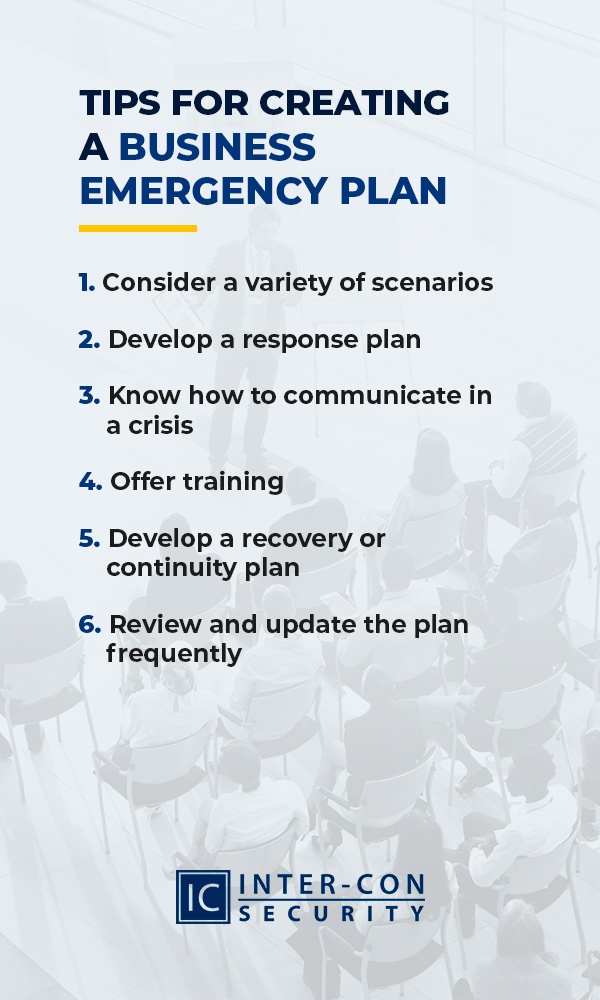
1. Consider a Variety of Scenarios
Your business’ response will vary based on the type of situation it finds itself in. Your response to a hurricane will be considerably different from your response to an active shooter or a public health crisis. For that reason, it’s important that you have a detailed response plan for each type of emergency.
As you consider the scenarios that might come up, assess the damage that each one could cause to your company, the risk of a particular scenario occurring, and what you will need to appropriately respond to it.
2. Develop a Response Plan
More likely than not, a response will be required in the event of an emergency. How people at your company respond to a situation depends on the risk and what’s at stake. Generally speaking, there are four ways to respond in the middle of a disaster:
- Evacuate
- Shelter
- Shelter-in-Place
- Lockdown
Before a significant weather event, such as a hurricane, your best option might be to have the building evacuated. Your plan should include details on how to quickly and safely get everyone out of the building and how to confirm that the building has been fully evacuated. It’s also worthwhile to have a map of the building with emergency exits marked and with possible escape routes outlined.
Sheltering and shelter-in-place are similar but are used in different situations. You might ask people in the building to seek shelter if a tornado is on the way. Sheltering usually involves moving away from rooms with windows and finding a place on the interior of the building. In the event of a situation outside of your building, such as a chemical leak, you might need to shelter-in-place to avoid exposure.
If a dangerous person is in the area near your business or in the building itself, a lockdown might be required. During a lockdown, people find a safe spot and secure it as much as possible. They might lock the doors or barricade the windows, for example.
3. Know How to Communicate in a Crisis
Communication is key to your business’ survival during and after a crisis. Having a strong communication plan in place also ensures that your employees and customers are kept safe. When developing your emergency response plan, choose specific individuals to serve as the primary communicators. For example, you might want to assign a manager in each department the responsibility of distributing the plan to employees within that department. The managers should also be responsible for sharing updates or new pieces of information with individuals.
Having accurate emergency contact information for every employee is also essential. If an employee should be harmed during a situation or if they need a ride home, your team should know who to get in contact with.
It’s also vital that your company have a communications plan in the event of a situation that affects your customers. For example, if a data breach should occur, you want to be able to control the message. Having a plan to communicate the details of a situation and to share how your business is responding to it will help you avoid lasting damage to your company’s reputation.
4. Offer Training
Your business response plan should include training and educational programs for your staff. People need to practice to learn how to respond in the event of a natural disaster or active shooter. Offering training programs and drills will equip your team with the knowledge they need to respond swiftly and appropriately if a real-life crisis occurs.
5. Develop a Recovery or Continuity Plan
Your business continuity plan can be part of your emergency plan, or it can be a separate document. What matters is that you have a plan in place for getting your company back on track after a significant event. The continuity plan can include methods of avoiding damage to your company as a result of a crisis. It should also outline ways to recover, such as financial resources to consider or assistance programs to check out.
6. Review and Update the Plan Frequently
Just like your company’s strategic plan, your business emergency plan is a document that is likely to need regular review and occasional updates. As the world changes and risks evolve, it is a good idea to review the plan at least once a year to make any changes to it or to account for changes in your business’ operations.
How Inter-Con Security Can Help You Plan for an Emergency
Since 1973, Inter-Con has offered comprehensive security solutions to governments and businesses. Our services include physical security, active shooter response training, and disaster and emergency response. Whether your company needs assistance in developing an effective emergency plan or is looking for specialized training to best prepare for your team for a crisis situation, we can help.
Contact us today to learn more.
Traveling to new and exciting places is a perk of business travel. You get to explore cities you may have always wanted to visit while working and getting paid. Unlike leisure travel, though, business travel comes with the need for added security, since you have to protect both yourself and your employer.
Business travel safety tips are often similar to leisure travel safety tips, but specific aspects require heightened attention, such as your work computer or phone. Additionally, work can take you to places you’d never dream of going for a leisure vacation, so researching the destination is crucial for business travel safety.
How to Have a Safe Business Trip
Your business travel safety checklist should include three pivotal parts: before, during and after. Doing research ahead of time will make the trip itself go much more smoothly because it’ll allow you to properly prepare and take precautions while on your trip.
Before Your Trip
Preparing for corporate travel safety can be relatively straightforward, since you likely don’t have to do thorough research on the hotel where you’ll be staying. Also, depending on the length of your trip, work obligations will fill your days. Nevertheless, there are things you can do to further protect yourself.
- Leave behind expensive items: Leave heirloom jewelry, top-tier electronics and anything else that has monetary or sentimental value in the safety of your home. Instead, pack substitutes that are still professional-looking, but bland enough to avoid drawing the attention of any would-be thieves.
- Locate hospitals and police stations: Before you leave, do some research and note the closest hospital and police station to your hotel. It’s always a good idea to know where the nearest help is. Save the addresses on your phone or email them to yourself for easy access.
- Share your itinerary: Make sure your close family or friends have a copy of your flight and hotel details, so they can check for any delays or changes without needing you to contact them. It’s also an excellent way to ensure people will raise questions if you are not at the airport when your schedule suggests you should be.
- Share your meetings: You likely have meetings and conferences set up for your business trip, and it’s a good idea to let people in your office know of your work schedule while traveling. Tell them when you have meetings, where and with whom. You can also notify them after the meeting to verify that all went well.
- Pack to blend in: Make sure the clothes you take with you don’t single you out as a foreigner. Bring clothes that will allow you to fit in with the locals, but also pack according to the weather at your destination.
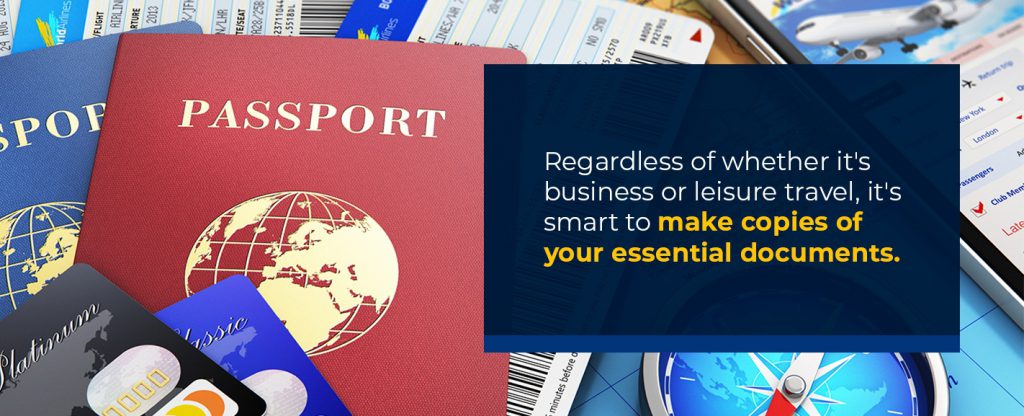
- Back up documents: Regardless of whether it’s business or leisure travel, it’s smart to make copies of your essential documents — like your passport, hotel reservations and flight details — and store them in the cloud or a password-protected USB key. You might also want to provide a copy to a trusted co-worker, just in case.
- Pack a portable charger: The last thing you want is to get lost in a sketchy part of town with a dead phone, so pack a portable charger and carry it with you at all times, even if your phone battery has a full charge.
- Always keep your bags with you: Aside from decreasing the risk of theft, having your carry-on with you at all times — especially at the airport — also reduces the risk of someone sneaking something into your bag that may later get you detained by customs.
During Your Trip
Once you’re at your destination, you can relax a little — but there are still ways to be diligent and prioritize safety. A lot of it is common sense, requiring awareness about your surroundings, but there are some extra things most people don’t consider, which would-be criminals rely on.
- Reserve transportation: Instead of waiting in endless lines for taxis at the airport, reserve transportation before you arrive, so it’s ready for you. That way, you’ll get to your hotel sooner, and won’t have to worry about getting lost in a new city. Reserving a car or taxi will likely be the easiest way to travel throughout your trip, as well as being the safest.
- Bring backup cash and cards: An emergency reserve hidden away in your carry-on can become a lifesaver if you ever lose your wallet or purse. Keep an emergency credit card as well as some cash in a separate place, so you’re never totally empty-handed.
- Confirm hotel’s security: Ideally, you’ll be staying somewhere that offers security services 24/7, but if your hotel doesn’t have that, get the number of their security service either before you fly or when you’re checking in. Save the number in your phone, so you can call it if you have any concerns or problems.
- Explore alone in daylight: This tip is especially crucial if you’re traveling to a city you’re unfamiliar with. Instead of wandering alone in the dark and potentially ending up in a dangerous area, limit your solo adventuring to daylight hours. If you want to check out the nightlife, make sure to always travel with a trusted group.
- Use concierge services: If your hotel offers concierge service, take advantage of it. Concierges will know the city better than you do and will put your safety and comfort above all else. Use the service to book museum tours, restaurant reservations or schedule taxis. Concierge services can also provide insider tips on where to best explore as a solo business traveler, so take advantage of their expertise to make the most of your trip.
- Request an interior room: Having a hotel room that faces a busy street may not be the best, especially if you’re traveling with multiple electronics for work. Request a room with an interior entrance — one that is only accessible from inside the hotel. It’s also a good idea to request a room that isn’t on the ground floor to prevent break-ins.
- Bring a portable lock: You can never be too safe, especially when you’re staying in a hotel room in which thousands of people have previously been. For an extra layer of security for your possessions and yourself, bring a portable lock and use it in addition to the hotel’s lock. That way, you can ensure that only you and anyone you consent to let in will be able to access your room.
- Use the deadbolt: If buying a portable lock isn’t an option, there’s always the deadbolt or door chain of the hotel. While the lock may have multiple keys to access it, it’s much harder to get past a door chain or a deadbolt. If your hotel room possesses one or both of these, take advantage of them to keep safe while sleeping or working in your room.
- Check all the locks: A lock is useless if it’s faulty, so before settling into your hotel room, double-check all the existing locks to make sure they work as they’re supposed to. These include the door lock and any window or balcony door locks.
- Beware of public Wi-Fi: As technology becomes more advanced, so do hackers and their tricks. Public Wi-Fi networks — even the free Wi-Fi at your hotel — isn’t as secure as it should be. One of the best corporate travel safety tips is to invest in a virtual private network, especially if you plan to get work done in your hotel room or on-site at meetings or conferences where public, unsecured Wi-Fi is the only option. If you do decide to use hotel or public Wi-Fi, avoid using any sites or apps requiring personal information.
Traveling Internationally
If you’re traveling within your home country, you can likely expect most things to be very much like the city you live in. However, international travel comes with a whole other set of business travel safety concerns to consider and prepare for.
- Don’t get lost: Before flying, make sure you have the address of the hotel you’ll be staying at and a contact number and contact person you can rely on if something goes wrong. This scenario is another reason reserving transportation from the airport is beneficial, because you can rest easy that a trusted driver will take you to the correct address.
- Be wary of food and drinks: Aside from concerns about food poisoning and ensuring your vaccines are up to date, you should always be aware of what you’re consuming in foreign areas. It’s best to rely on concierge services or room service, if available, to get your meals. If you do go out to bars or for social outings, never leave your drink or meal unattended.
- Be aware of local customs: When traveling to a different country, you often have to adhere to their local traditions, even if they differ from what you’re used to. Research your destination and learn about its social and business customs. A well-meaning mistake on your part could translate into profound offense for someone else and could risk the integrity of your business. It could also put you in danger. Ignorance can land you in hot water in more ways than one, so go prepared with knowledge.
- Know the laws: Similarly, each country will have different laws that everyone — residents and visitors alike — must follow. These laws may be in direct opposition to those of your home country. For example, consuming alcohol or tobacco may be illegal in other countries or only be OK in specific situations, so be aware of the legal differences to stay under the radar.

- Only use registered vehicles: Some countries are notorious for illegal taxi drivers who prey on unsuspecting tourists. If you need to hire a cab or rideshare, book one through your hotel. You can also research how to tell fake cabs from legitimate ones, in case you ever need to hail a cab when out and about on your own.
Corporate Travel Safety With Private Security
There’s only so much you can do to protect yourself during business travel. You’re only human, so there’s always a chance that you’ll make a mistake that will jeopardize your safety. Hiring private security for your business travel safety is a solution that allows you to live your life without worrying about keeping safe at the same time. With private security, you can focus on your work and your business and leave the safety aspect to professionals.
Not everyone needs a fleet of bodyguards or security personnel, which is why Inter-Con Security offers various security services to meet each client’s individual needs, based on factors such as a threat profile, area of operation and level of comfort.
Executive Protection
Using the expertise of retired Secret Service agents and that of protective operation agents from the Department of State, Inter-Con’s Executive Protection services feature trained and vetted specialists who provide safety and security while maintaining the highest level of discretion.
We tailor services to suit individual clients and their specific needs to ensure top-tier service.
Specialized Services
Whether you need security to safeguard classified information or security for specific events, the Specialized Services offered by Inter-Con Security are customizable to suit your needs, and are available for both domestic and international security.
Augment your existing security service with our trained specialists to take advantage of a wide spectrum of specialized security services.
Physical Security
The foundation of Inter-Con Security is the team of professional, experienced and trained Physical Security Specialists, who provide top-quality security for people and facilities. We thoroughly vet all potential hires following the highest standards in the U.S. — and then adapt their training to apply internationally as well, making our Physical Security Specialists ideal for corporate travel safety.
As with all other security services, physical security is fully customizable to each client’s individual safety needs and requirements.
Personalized Security Services From Inter-Con Security
Working with clients in four continents, Inter-Con Security provides customized security solutions for several industries, including corporations and organizations. With a focus on improving our services, we are continually updating and improving our staff’s performance by adding technology to aid with communication, surveillance and emergency response.
Established in 1973 by a former LAPD detective, Inter-Con Security started developing sophisticated procedures to secure sensitive information at NASA. Today, we bring the same respect to all our clients, from Fortune 500 companies to government agencies at the federal, state and local levels. With tailored solutions and expert security, Inter-Con Security offers invaluable peace of mind.
Inter-Con Security has a proven history of developing successful security solutions for various industries, based on their unique needs. We’ll work with you and your existing security service to develop a comprehensive solution catered to your threat profile.
Get in touch with our Solution Design Team to create your personalized security system.
Inter-Con Security is dedicated to your health and safety. We greatly appreciate your hard work and dedication during this time of uncertainty. As we navigate through this pandemic together, we are committed to doing our best as a company to bring you resources and tools that we hope will be helpful to you and your families.
Quick Guide to Resources:
- Centers for Disease Control (CDC)
- World Health Organization (WHO)
- Disaster Distress Hotline (Free Government Service for Counseling and Resources)
- NIH (National Institute of Health) Covid-19 Information
The Latest COVID-19 Updates from Inter-Con Security:
COVID-19 Newsletter 12/17/21
With the holidays approaching, it’s important that we remain diligent in our safety as well as those around us. On November 26, 2021, the World Health Organization (WHO) classified Omicron as a new Covid-19 variant. The U.S. has seen recent cases of this new variant along with the Delta variant that continues to remain the predominant strain. According to the CDC, vaccines and boosters are the best the defense against Covid-19. Face coverings continue to be recommended and are mandatory in some states regardless of vaccine status. We remain committed to your health and safety, and greatly appreciate your continued support, hard work, and dedication. We will continue to do our best as a company to bring you resources, information, and tools that we hope will be helpful to you and your families.
Included in this newsletter is information on indoor mask mandates, Omicron, Booster shots, and safe holiday planning.
Indoor Mask Mandate
Indoor mask mandates have been reinstated for New York and California, effective 12/15/21. Along with California and New York, the following states: Hawaii, New Mexico, Illinois, Nevada, Oregon, and Washington have also reinstated or continued indoor mask mandates for most everyone, regardless of vaccination status. To check the status of all states, please click here to read more.
Omicron Variant
While there is still little information about the new variant, Omicron, it is important that we take precautions to keep ourselves and those around us safe. Per the CDC, below is information on ways to protect ourselves against the new variant:
- Vaccines remain the best public health measure to protect people from COVID-19, slow transmission, and reduce the likelihood of new variants emerging, including Omicron.
- Masks offer protection against all variants – Delta and Omicron.
- Tests can tell you if you are currently infected with COVID-19, which could include Omicron.
Read More Here.
CDC Expands Booster Shots to Adults
The CDC has announced that now all adults can get and are eligible for a booster shot. Below are more details:
Pfizer-BioNTech or Moderna
When to get the booster:
At least six months after completing your primary COVID-19 vaccine series.
Which booster should you get?
Any of the COVID-19 vaccines authorized in the United States.
Johnson & Johnson’s Janssen
When to get a booster:
At least 2 months after completing your primary COVID-19 vaccination.
Which booster should you get?
Any of the COVID-19 vaccines authorized in the United States.
Read More Here.
Planning Safe Holiday Gatherings
With the holidays in full swing, it’s important to start thinking about how to celebrate safely. Although this is the time of year to spend with your loved ones, it is important we keep ourselves and those around us safe. Here are some tips from the CDC on hosting safe gatherings:
- Get vaccinated and get a booster shot.
- If you are not fully vaccinated and aged 2 or older, you should wear a mask in indoor public places.
- In general, you do not need to wear a mask in outdoor settings. In areas with high numbers of COVID-19 cases, consider wearing a mask in crowded outdoor settings and for activities with close contact with others who are not fully vaccinated.
- People who have a condition or are taking medications that weaken their immune system may not be fully protected even if they are fully vaccinated. They should continue to take all precautions recommended for unvaccinated people, including wearing a well-fitted mask, until advised otherwise by their healthcare provider.
- If you are fully vaccinated, to maximize protection from the different variants and prevent possibly spreading them to others, wear a mask indoors in public if you are in an area of substantial or high transmission.
Read More Here.
COVID-19 Newsletter 11/5/21
As we continue to navigate through challenges during Covid-19, please know that we remain committed to your health and safety, and greatly appreciate your continued support, hard work, and dedication. We will do our very best as a company to bring you resources and tools that we hope will be helpful to you and your families.
Included in this newsletter is information on vaccine boosters, vaccines for children, attending holiday gatherings, and CDC mask guidance.
COVID-19 Vaccine Booster Shots
Per the CDC, People 65 years and older, 50–64 years with underlying medical conditions, or 18 years and older who live in long-term care settings should receive a booster shot. They also recommend that People 18 years and older should receive a booster shot at least 2 months after receiving their Johnson & Johnson/Janssen COVID-19 vaccine. Click here to read more about specific vaccines and boosters.
Children Now Eligible for Pfizer Vaccine
Per the CDC, “scientists have conducted clinical trials with about 3,000 children and the FDA has determined that the Pfizer-BioNTech COVID-19 Vaccine has met the safety and efficacy standards for authorization in children ages 5 through 15 years.” For more information, click here to visit the CDC website.
CDC Mask Guidance
While mask restrictions have been lifted in certain areas, some still require it. Please see below for CDC’s guidance on wearing masks.
- Everyone 2 years of age or older who is not fully vaccinated should wear a mask in indoor public places.
- In general, you do not need to wear a mask in outdoor settings.
- In areas with high numbers of COVID-19 cases, consider wearing a mask in crowded outdoor settings and for activities with close contact with others who are not fully vaccinated.
- People who have a condition or are taking medications that weakentheir immune system may not be fully protected even if they are fully vaccinated. They should continue to take all precautions recommended for unvaccinated people, including wearing a well-fitted mask.
- If you are fully vaccinated, to maximize protection from the Delta variant and prevent possibly spreading it to others, wear a mask indoors in public if you are in an area of substantial or high transmission.
Read More Here.
Attending Holiday Gatherings
Before attending holiday gatherings, review the following CDC tips to ensure your safety and the safety of others:
- If you haven’t been vaccinated yet, find a vaccine.
- If you are not fully vaccinated and aged 2 or older, you should wear a mask in indoor public places.
- In general, you do not need to wear a mask in outdoor settings. In areas with high numbers of COVID-19 cases, consider wearing a mask in crowded outdoor settings and for activities with close contact with others who are not fully vaccinated.
- People who have a condition or are taking medications that weaken their immune system may not be fully protected even if they are fully vaccinated. They should continue to take all precautions recommended for unvaccinated people, including wearing a well-fitted mask.
- If you are fully vaccinated, to maximize protection from the Delta variant and prevent possibly spreading it to others, wear a mask indoors in public if you are in an area of substantial or high transmission.
Read More Here.
COVID-19 Newsletter 10/15/21
Protecting ourselves against Covid-19 is critical. Vaccines are the best form of protection and we encourage you to visit the CDC website for more information. Vaccines are readily available, and you can find locations by visiting your local pharmacy and or local state/city public health website. We remain committed to your health and safety, and greatly appreciate your continued support, hard work, and dedication. We will continue to do our best as an organization to bring you resources, information, and tools that we hope will be helpful to you and your families.
Included in this newsletter is information on workers who may be eligible for a Pfizer booster shot, the seasonal flu vaccine, and safe holiday planning.
Workers Who May Get Pfizer-BioNTech Booster Shots
CDC recommends that people who work in occupations with higher risk of Covid-19 exposure and have received a Pfizer-BioNTech shot, look to obtain a booster at least six months after completion of their Pfizer-BioNTech initial series. CDC is also recommending boosters for people 65 years and older and or those that are immunocompromised. Check with your physician if you have questions.
Below are examples of occupations where workers might be at increased risk of exposure to the virus that causes COVID-19. This list does not include all potential occupations where a worker could have an increased risk for exposure. Individuals should talk with their healthcare provider about their personal risks.
- First Responders (e.g., healthcare workers, firefighters, police, congregate care staff)
- Education Staff (e.g., teachers, support staff, daycare workers)
- Food and Agriculture workers
- Manufacturing workers
- Corrections workers
- U.S. Postal Service workers
- Public Transit workers
- Grocery Store workers
Planning Safe Holiday Gatherings
With the holidays approaching, it’s important to start thinking about how to celebrate safely. Although this is the time of year to spend with your loved ones, it is important we keep ourselves and those around us safe. Here are some tips from the CDC on hosting safe gatherings:
- Get vaccinated.
- If you are not fully vaccinated and aged 2 or older, you should wear a mask in indoor public places.
- In general, you do not need to wear a mask in outdoor settings. In areas with high numbers of COVID-19 cases, consider wearing a mask in crowded outdoor settings and for activities with close contact with others who are not fully vaccinated.
- People who have a condition or are taking medications that weaken their immune system may not be fully protected even if they are fully vaccinated. They should continue to take all precautions recommended for unvaccinated people, including wearing a well-fitted mask, until advised otherwise by their healthcare provider.
- If you are fully vaccinated, to maximize protection from the Delta variant and prevent possibly spreading it to others, wear a mask indoors in public if you are in an area of substantial or high transmission.
Read More Here.
Seasonal Flu Vaccine
With the flu season in full swing, it is important to protect ourselves from the flu. Flu vaccines are readily available for administration. To see if it is recommended for you, please click here.
COVID-19 Newsletter 9/10/21
With the continued rise in Covid-19 cases due to the Delta variant, it’s imperative we remain vigilant in our safety and health practices. As an organization, we remain committed to your health and safety, and greatly appreciate your continued support, hard work, and dedication. We will continue to do our best as a company to bring you resources, information, and tools that we hope will be helpful to you and your families.
Included in this newsletter is information on COVID-19 testing in schools, vaccine boosters for the immunocompromised, and the CDC’s COVID-19 data tracker.
COVID-19 Testing in Schools
As children go back to in-school learning, it is important that we are keeping both them our families safe. Per the CDC, many schools are offering testing for people with symptoms or people who have been in contact with someone who has had COVID-19. To learn more about your school’s testing protocols, please visit your school’s website or contact them directly.
Read More Here.
COVID-19 Vaccine Booster for Moderately to Severe Immunocompromised People
The CDC now recommends that people whose immune systems are compromised moderately to severely should receive an additional dose of mRNA COVID-19 vaccine after the initial 2 doses.
Read More Here.
CDC’s COVID-19 Data Tracker
With the rise in Delta Variant cases, the CDC created a website where you can get real-time information regarding COVID-19 information in your county, such as case number, deaths, and hospitalization.
Read More Here.
COVID-19 Newsletter 8/6/21
Covid-19 recommendations and guidelines are changing regularly as new developments arise. At this time, the CDC is recommending that everyone, regardless of vaccination status, wear masks indoors. To date, the following states have indoor mask mandates, California, New York, Connecticut, Hawaii, Illinois, Nevada, New Mexico, and Washington. It is recommended you regularly check your state guidelines as mask mandates are changing daily. As we continue to learn more about the pandemic through the CDC as well as local, state, and federal resources, it’s important to remain diligent in our safety practices, both at work and at home.
We remain committed to your health and safety, and greatly appreciate your continued support, hard work, and dedication. We will continue to do our best as a company to bring you resources, information, and tools that we hope will be helpful to you and your families.
Included in this newsletter is information on state by state face mask guidance, where to get a vaccine, the Delta Variant, and the COVID-19 Vaccine, and staying up to date on the CDC’S latest news and updates.
State by State Guide to Face Mask Requirements
To find specific state guidelines, visit the AARP – State’s Mask Mandate site. You can also go directly to your state’s or city’s public health department page.
Where to get a Vaccine
To find a vaccine location near you, please visit Vaccines.gov. This site will provide you with the following information:
- Types of Covid-19 vaccines available
- Website & phone number for next steps
- Hours of operation
Local pharmacies such as Walgreens, Rite-Aid, and CVS also have vaccine information available.
Delta Variant & the COVID-19 Vaccine
With the increased spread of the Delta Variant, the CDC is recommending that everyone who is eligible to get vaccinated. According to the CDC:
- COVID-19 vaccines are effective against severe disease and death from variants of the virus that causes COVID-19 currently circulating in the United States, including the Delta variant.
- Infections happen in only a small proportion of people who are fully vaccinated, even with the Delta variant. When these infections occur among vaccinated people, they tend to be mild.
- If you are fully vaccinated and become infected with the Delta variant, you can spread the virus to others.
- People with weakened immune systems, including people who take immunosuppressive medications, may not be protected even if fully vaccinated.
Read More Here.
Stay up to Date on CDC’s Latest News & Updates
Subscribe for free and stay up-to-date with the latest information by subscribing to CDC journals, publications, articles, and much more. Click here to subscribe now.
COVID-19 Newsletter 7/9/21
As we continue to learn more about the pandemic through the CDC as well as local, state, and federal resources, it’s important to remain diligent in our safety practices, both at work and at home. We remain committed to your health and safety, and greatly appreciate your continued support, hard work, and dedication. We will continue to do our best as a company to bring you resources, information, and tools that we hope will be helpful to you and your families.
Included in this newsletter is information on benefits of getting a COVID vaccine, where to get a vaccine, types of masks recommended by the CDC, and the CDC Travel Planner.
Benefits of Getting a COVID Vaccine
In an effort to increase vaccination rates, the CDC recommends that everyone who is eligible gets fully vaccinated. Below are benefits of being fully vaccinated:
- The COVID vaccines are safe
- The COVID vaccines are effective
- Once you are fully vaccinated, you can start doing more
- The COVID vaccine is a safer way to help build protection against the virus
- None of the COVID vaccines can make you sick with COVID
Read More Here.
Where to Get a Vaccine
To find a vaccine location near you, please visit Vaccines.gov. This site will provide you with the following information:
- Types of Covid-19 vaccines available
- Website & phone number for next steps
- Hours of operation
- Local pharmacies such as Walgreens, Rite-Aid, and CVS also have vaccine information available
CDC Travel Planner
With things opening back up, people are beginning to travel again. While this is exciting, it is important that we are aware of restrictions and guidelines in place so we can better protect ourselves and those around us. To help with this, the CDC has created a Travel Planner that can be accessed here.
Types of Masks Recommended by the CDC
The CDC recommends that those who are not fully vaccinated still wear masks. With many types of masks out there, it’s important to know which work best. Here is a chart to help you choose an appropriate mask:
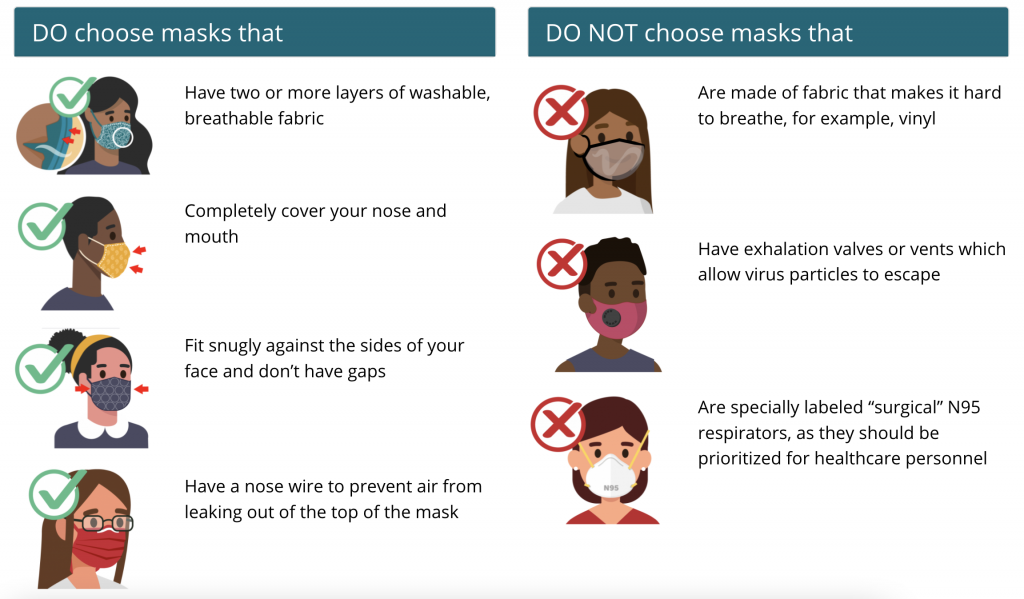
Read More Here.
COVID-19 Newsletter 6/4/21
While CDC and various State’s Covid-19 guidance remain fluid, it’s important to continue taking appropriate safety measures, both at work and at home. Although some mask mandates have eased, we still must ensure compliance with Federal and State OSHA regulations. We are committed to your health and safety, and greatly appreciate your ongoing support, hard work, and dedication. We will continue to do our best to bring you resources, information, and tools that we hope will be helpful to you and your families.
Included in this newsletter is information on vaccines for ages 12 and older, the V-Safe phone app, and what you can do once you are fully vaccinated.
Vaccines for Ages 12 & Older
Although fewer children have been infected with COVID-19 compared to adults, children can:
- Be infected with the virus that causes COVID-19
- Get sick from COVID-19
- Spread COVID-19 to others
The CDC recommends that everyone who is 12 and older get the COVID-19 vaccine. The CDC has deemed the Pfizer-BioNTech Vaccine safe for those 12 and older.
Prepare for Your Child’s Vaccination Visit
- Talk to your child before the visit about what to expect
- Tell the doctor or nurse about any allergies your child may have
- Comfort your child during the appointment
- To prevent fainting and injuries related to fainting, your child should be seated or lying down during vaccination and for 15 minutes after the vaccine is given
- After your child’s COVID-19 vaccination, you will be asked to stay for 15–30 minutes so your child can be observed in case they have a severe allergic reaction and need immediate treatment
Read More Here.
Once You are Fully Vaccinated
- You can resume activities that you did prior to the pandemic
- You can resume activities without wearing a mask or staying 6 feet apart, except where required by federal, state, local, tribal, or territorial laws, rules, and regulations, including local business and workplace guidance
- If you travel in the United States, you do not need to get tested before or after travel or self-quarantine after travel
- You need to pay close attention to the situation at your international destination before traveling outside the United States
- You do NOT need to get tested before leaving the United States unless your destination requires it
- You still need to show a negative test result or documentation of recovery from COVID-19 before boarding an international flight to the United States
- You should still get tested 3-5 days after international travel
- You do NOT need to self-quarantine after arriving in the United States
- If you’ve been around someone who has COVID-19, you do not need to stay away from others or get tested unless you have symptoms
- However, if you live or work in a correctional or detention facility or a homeless shelter and are around someone who has COVID-19, you should still get tested, even if you don’t have symptoms
Read More Here.
v-safe Phone App
V-safe is a smartphone-based tool that uses text messaging and web surveys to provide personalized health check-ins after you receive a COVID-19 vaccine. Through v-safe, you can quickly tell CDC if you have any side effects after getting a COVID-19 vaccine. Depending on your answers to the web surveys, someone from CDC may call to check on you and get more information. V-safe will also remind you to get your second COVID-19 vaccine dose if you need one. Parents and guardians can also enroll adolescents (ages 12 and older) in v-safe and complete health check-ins on their behalf after COVID-19 vaccination.
Read More Here.
COVID-19 Newsletter 5/21/21
COVID-19 guidance remains fluid and recommendations continue to be reviewed at Federal, State, and local levels. Below, we address our company’s guidelines on continued use of masks while at work to maintain the safety of all employees. We will continue to do our best as an organization to bring you resources, information, and tools that we hope will be helpful to you and your families.
Included in this newsletter is information on mask and quarantine guidance as well as information on vaccines for kids 12-16 years old.
Mask Guidance
The CDC recently changed their guidance about wearing masks for fully vaccinated individuals. Fully vaccinated means at last two full weeks have passed since the 2nd dose of Pfizer or Moderna, or two weeks from the Johnson & Johnson single dose. Many states, however, are still taking this new recommendation under advisement and have not yet changed mask wearing mandates. Therefore, we will continue to take a conservative and precautionary approach and require that all employees continue to wear masks at work. For information about each state’s stance on masks as of 5/17/21, please click the link below. To visit the CDC website, please click here.
CDC and CAL/OSHA Quarantine Updates
For Fully Vaccinated People, which indicates that fully vaccinated individuals who have had exposure to COVID-19 do not need to quarantine if they are asymptomatic. Below are common FAQs.
Q: When must an employer exclude employees from work?
A: Employers must exclude from work employees who are not fully vaccinated if they (1) are COVID-19 cases, or (2) have had COVID-19 exposure. Employers must also exclude fully vaccinated employees if they (1) are COVID-19 cases, or (2) have had a COVID-19 exposure and exhibit COVID-19 symptoms. However, employers do not need to exclude fully vaccinated employees who had a COVID-19 exposure who are asymptomatic.
Q: What are the criteria for an employee who is not fully vaccinated and exposed to a COVID-19 case to return to work?
A: An exposed employee who does not develop symptoms of COVID-19 may return to work after 10 days have passed since the date of last known exposure.
Q: What are the quarantine requirements for a fully vaccinated employee exposed to a COVID-19 case?
A: An exposed employee who does not develop symptoms of COVID-19, does not need to quarantine.
Pfizer-BioNTech COVID-19 Vaccine Recommended for Ages 12-16
The CDC has announced that the Pfizer-BioNTech COVID-19 vaccine can now be taken by those who are between 12 and 15, and less than or equal to 16 years of age. Below is a summary of vaccine types and eligible ages:
- Pfizer-BioNTech COVID-19 vaccine (in persons ages 12–15 years and ages ≥ 16 years)
- Moderna COVID-19 vaccine (in persons ages ≥ 18 years)
- Janssen (Johnson & Johnson) COVID-19 vaccine (in persons ages ≥ 18 years)
Learn more here.
COVID-19 Newsletter 5/7/21
As the economy begins opening back up and more people are out and about, it’s important that we still continue to remain proactive with our safety practices both at work and at home. Masks are still required indoors and around high-risk or unvaccinated individuals. Our commitment to your health and safety remains a priority and we will continue to do our best as a company to bring you resources and tools that we hope will be helpful to you and your families.
Included in this newsletter are helpful tips and resources on choosing safer activities, vaccine availability and accessibility, and information for fully vaccinated people.
Choosing Safer Activities
With more businesses opening back up, people are engaging in more activities. While this is positive and exciting, it’s important that we remain safe. Here is a guide with information on choosing safer activities:
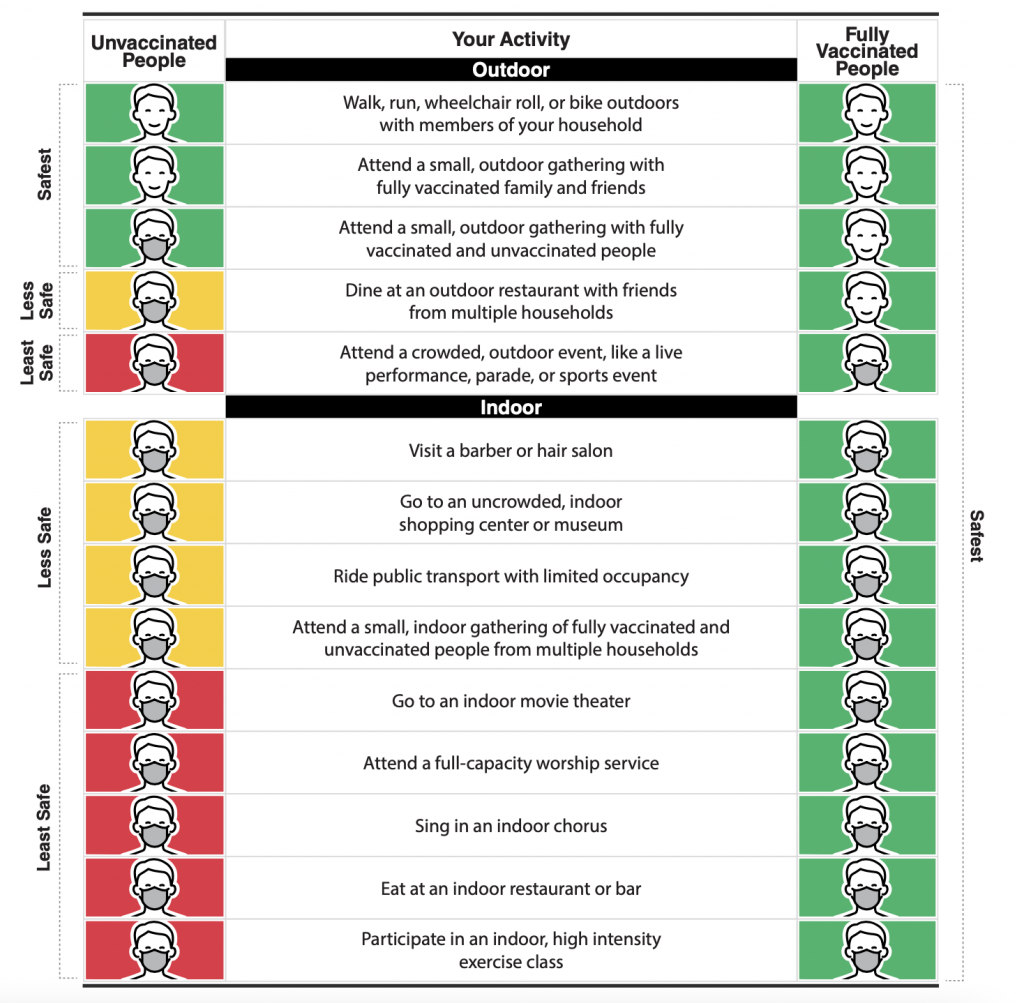
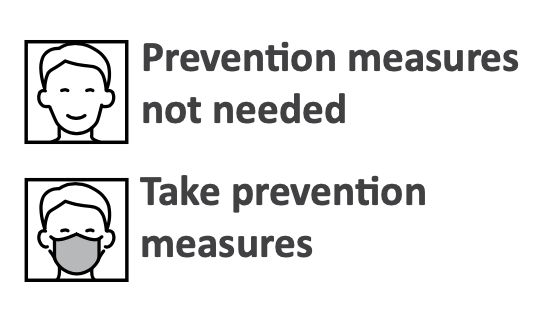
Information for Fully Vaccinated People
With many people getting vaccinated, there are questions about how this impacts their daily life. Below is a list of things your can start to do when you are fully vaccinated:
- You can gather indoors with fully vaccinated people without wearing a mask or staying 6 feet apart.
- You can gather indoors with unvaccinated people of any age from one other household (for example, visiting with relatives who all live together) without masks or staying 6 feet apart, unless any of those people or anyone they live with has an increased risk for severe illness from COVID-19.
- You can gather or conduct activities outdoors without wearing a mask except in certain crowded settings and venues.
- If you travel in the United States, you do not need to get tested before or after travel or self-quarantine after travel.
Vaccine Availability & Accessibility
Many states have opened vaccines up to everyone 16 and older making it easier for many people to get vaccinated. Some states have also begun allowing walk-up visits at vaccine sites, reducing the burden of scheduling appointments. Learn more about your state’s vaccine availability and process by clicking here.
COVID-19 Newsletter 4/16/21
Remaining diligent in our safety practices is critical, both at home and at work. Many states have opened vaccines to everyone 16 and older. We encourage you to review information from the CDC on vaccines so that you have all the information available on where and how to get the vaccine for you or a family member. We greatly appreciate your continued hard work, support, and dedication. We will do our best as an organization to bring you resources and tools that we hope will be helpful to you and your families.
Included in this newsletter are helpful tips and resources on vaccine types, common vaccine side effects, vaccine finder tools, and vaccines for older adults.
Vaccine Types & CDC Information
According to the CDC, we currently have three vaccines that are authorized and recommended in preventing COVID-19. To learn more, please visit the CDC website.
Common Vaccine Side Effects & Tips
- On the arm where you got the shot: pain and swelling
- Throughout the rest of your body: fever, chills, tiredness, and headache
- To reduce pain, apply a clean, cool, wet washcloth over the area and use or exercise your arm
- To reduce discomfort from fever: drink plenty of fluids and dress lightly
Click here for additional information.
Plan Your Vaccine
It’s important to be prepared for getting the vaccine. The following link here will help you create a plan for doing so.
CDC Vaccine Finder (All States)
With so much information out there regarding the vaccine, it’s important to understand where and when you can get it. To access CDC’s vaccine finder, which helps you find vaccine information near you, please click here. It includes information about:
- Types of COVID vaccines available
- Websites, hours, and phone numbers for providers
- Instructions on how to get the vaccine
COVID-19 Newsletter 2/26/21
California will begin phase 1B vaccinations on March 1st. This phase includes security guard employees. Some additional states are following similar protocols based on vaccine availability. Please review the Information provided below so that you can check with your local health department if you are eligible.
The CDC is recommending that everyone, when eligible, get vaccinated. If you would like more information on vaccines, please visit www.cdc.gov. You can also refer to our previous newsletter for additional resources.
We also encourage you to continue to regularly look at your local health department websites for updated information. Many local health departments allow you to sign up with your personal email for vaccine updates and timelines.
Los Angeles County Vaccines for Phase 1B
Please review the information below and visit VaccinateLACounty.com for more information on when and where people in these sectors can get vaccinated.
Always check with trusted sources for the latest accurate information about novel coronavirus:
- Los Angeles County Department of Public Health
- California Department of Public Health
- Centers for Disease Control and Prevention (CDC)
- World Health Organization
California Vaccine Eligibility
To find out if you are eligible as of March 1st, please visit My Turn at https://myturn.ca.gov/.
All Other States
Visit Wall Street Journal to enter your state. Once you enter the state, you will be provided a link to the local health department site where you will be provided with information time- lines, vaccine sign ups, and eligibility. Some of the states provide a direct link to their vaccine appointment site.
COVID-19 Newsletter 2/5/21
As we continue to work through this ongoing pandemic, it’s important to remain diligent in our safety practices, both at work and at home. We remain committed to your health and safety, and greatly appreciate your con- tinued support, hard work, and dedication. We will continue to do our best as a company to bring you resources and tools that we hope will be helpful to you and your families.
Included in this newsletter are helpful tips and resources on vaccines, common vaccine side effects, Covid-19 resources, and face coverings.
Vaccine Types & CDC Information
According to the CDC, we currently have three vaccines that are authorized and recommended in preventing COVID-19. Visit the CDC site to learn more.
Common Vaccine Side Effects & Tips
- On the arm where you got the shot: pain and swelling
- Throughout the rest of your body: fever, chills, tiredness, and headache
- To reduce pain, apply a clean, cool, wet washcloth over the area and use or exercise your arm
- To reduce discomfort from fever: drink plenty of fluids and dress lightly
Click here for additional information.
COVID-19 Resources
At Benefits.gov you can find helpful resources in regard to healthcare, food and vitamins, as well as a Benefit Finder tool to assist you in determining if you or someone you know is eligible for various benefits. Click here to learn more.
Face Coverings
Regardless of whether you have received both doses of the vaccine or previously had COVID-19, you must continue to wear a face covering. Face masks are important for not only your own safety, but the safety of those around you.
How to Select
When selecting a mask, there are many choices. Here are some do’s and don’ts.
DO choose masks that:
- Have two or more layers of washable, breathable fabric
- Completely cover your nose and mouth
- Fit snugly against the sides of your face and don’t have gaps
DO NOT choose masks that:
- Masks that are made with fabric that makes it difficult to breathe (vinyl, etc.)
- Have exhalation valves or vents which allow virus particles to escape
- Are intended for healthcare workers, including N95 respirators or surgical masks
COVID-19 Newsletter 1/8/21
First and foremost, we want to wish you all a happy new year! As we continue to work through this ongoing pandemic, it’s important to remain diligent in our safety practices, both at work and at home. We remain committed to your health and safety, and greatly appreciate your continued support, hard work, and dedication. We will continue to do our very best as a company to bring you resources and tools that we hope will be helpful to you and your families.
Included in this newsletter are helpful tips and resources on vaccines, types of masks not recommended by the CDC, washing your face coverings, home office ergonomics, and Cigna and COVID.
Vaccine Types & CDC Information
According to the CDC, we currently have three vaccines that are authorized and recommended in preventing COVID-19. Visit the CDC site for more information.
Types of Masks Not Recommended by the CDC
We have been wearing our masks for a while now, but just as a reminder, there are many types of masks out there and it’s important to know which work best. Here is a list of face masks/coverings that are not recommended by the CDC:
- Masks with ventilation ports
- Face shields (worn without masks)
- Masks that are intended for medical workers (N95, surgical, etc.)
- Masks that are made with fabric that makes it difficult to breathe (vinyl, etc.)
Face Covering Washing Best Practices
With mandated face covering regulations still in place, we are wearing our masks nearly everywhere we go. With the amount of use our face masks get, it’s crucial we keep them clean for our health and the health of those around us. Here are a few of CDC’s tips for washing and drying face masks:
- Use your washing machine
- If hand-washing, use a bleach solution
- Use your dryer
- Hang to air dry
Home Office Ergonomics
While many of us have been working from home for some time now, it is important to brush up on home office ergonomics. Here are some tips to ensure your home office is ergonomically sound:
- Have a chair that supports your spinal curves
- Ensure your mouse and keyboard are within comfortable reach
- Ensure your feet are flat on the floor
- Have a monitor that is eye level
- Ensure your desk is the right size for you
COVID-19 Newsletter 12/4/20
In our continued effort to navigate through COVID-19 and the holidays, please know that we remain committed to your health and safety, and greatly appreciate your continued support, hard work, and dedication. We will continue to do our best as a company to bring you resources and tools that we hope will be helpful to you and your families.
Check with your state for any public health orders in regard to gatherings, and if you have a Stay at Home Order, please ensure compliance and only celebrate with those in your immediate household.
Included in this Holiday COVID newsletter are helpful tips and information regarding hosting safe gatherings, attending gatherings, and safe travel.
Hosting Safe Holiday Gatherings
With the holidays approaching, families and friends are wanting to get together to celebrate. Although this is the time of year to spend with your loved ones, it is important we stay safe and comply with local, state, and federal guidelines. Here are some tips from the CDC on hosting safe gatherings:
- Remind guests to stay home if they are sick
- Encourage social distancing
- Require masks
- Encourage hand-washing often
- Limit the number of people serving/handling food
- Limit contact with commonly touched surfaces or shared items
Read more here.
Attending Holiday Gatherings
Before attending holiday gatherings, review the following CDC tips to ensure your safety and the safety of others:
- Stay home if you are having any symptoms, have been in contact with someone who tested positive, or are awaiting a COVID test result
- Use social distancing
- Wear a mask
- Limit indoor gatherings
- Bring hand sanitizer
- Avoid large gatherings of 10 and over (some states have stronger mandates so review guidelines)
Safe Travel During the Holidays
With the holidays, there is likely to be an increase in travel. If you must travel, follow the CDC’s tips and guidelines below:
- Prior to travel, check each state’s cases in the last 7 days
- If you are at high risk, consider not traveling
- If you have been exposed to someone who has had COVID in the last 14 days, do not travel
- Wear a mask
- Bring your own hand sanitizer
- Wash/sanitize your hands often
- Social distance
- Avoid touching your nose, eyes, and mouth
COVID-19 Newsletter 11/19/20
With the Thanksgiving holiday fast approaching, we wanted to remind everyone to be safe and ensure that CDC as well as state and local guidelines are being adhered to regarding COVID-19. We understand that it’s important to celebrate with family and friends, but we also need to be mindful of the precautions we should take to keep everyone safe. We hope that the resources and tools below will be helpful. We wish you all a safe and healthy holiday.
Included in this newsletter are helpful resources from the CDC. You can find more information by clicking here.
Everyone Can Make Thanksgiving Safer
- Wear a mask with two or more layers to stop the spread of COVID-19.
- Wear a mask over your nose and mouth.
- Make sure the mask fits snugly against the sides of your face.
Stay at Least 6 Feet Away from Others Who Do Not Live With You
Remember that people without symptoms can still transmit the virus. Plan for and comply with social distancing guidelines.
Hosting Thanksgiving
- Bring your own food, drinks, plates, cups, and utensils.
- Wear a mask, and safely store your mask while eating and drinking.
- Avoid going in and out of the areas where food is being prepared or handled, such as in the kitchen.
- Use single-use options, like salad dressing and condiment packets, and disposable items like food containers, plates, and utensils.
Thanksgiving Travel
- Check travel restrictions before you go.
- Get your flu shot before you travel.
- Always wear a mask in public settings and on public transportation.
- Stay at least 6 feet apart from anyone who is not in your household.
- Wash your hands often or use hand sanitizer.
- Avoid touching your mask, eyes, nose, and mouth.
- Bring extra supplies, such as masks and hand sanitizer.
COVID-19 Newsletter 11/6/20
We hope that the resources we provide are helpful to you and your families. Your health and safety are a priority and we appreciate your hard work and dedication while we continue to navigate through the challenges of this pandemic. Included in this newsletter are helpful tips and information regarding student resources through the National Education Association, Khan Academy, NASA, and Foreign language assistance.
COVID-19: How Can I Help Protect Myself?
- Call 2-1-1 for Help with Covid-19.
- Wear a face covering when you leave the house.
- Follow instructions on the CDC site for a guide to masks.
- Avoid close contact with people who are sick.
- Avoid touching your eyes, nose, and mouth with unwashed hands.
- Wash your hands often with soap and water for at least 20 seconds.
- Use an alcohol-based hand sanitizer that contains at least 60% alcohol if soap and water are not available.
National Education Association
If you need tips from teachers to help your children with school, this site provides some helpful insight directly from educational professionals. Click here for more information.
Khan Academy
Khan Academy has created a wide range of resources for students to tap into while learning from home. Click here to find out more about their fun and educational apps and resources.
Foreign Language Learning Apps
To answer students questions and assist with foreign language classes, check out one of these sites: Duolingo or RosettaStone.
NASA
Science, technology, engineering, and math, known as STEM, is at the core of NASA’s mission. This site offers hands on activities for students of all ages, broken down by grade levels. Click here to learn more.
COVID-19 Newsletter 10/9/20
Your health and safety are very important to us, and we greatly appreciate your hard work and dedication during this time of uncertainty. As we navigate through this pandemic together, we are committed to doing our best as a company to bring you resources and tools that we hope will be helpful to you and your families.
Included in this newsletter are helpful tips and resources regarding our Employee Assistance Program, COVID testing considerations, and 77 delicious dinner recipes.
Employee Assistance Program (EAP)
Cigna offers an Employee Assistance Program (EAP) to members via their 24/7 contact line 1.877.622.4327.
For non-Cigna members, please call the toll- free hotline at 1.866.912.1687.
COVID Testing Considerations and How to Get Tested
Who Should Get Tested:
- People who have symptoms of COVID-19
- People who have had close contact (within 6 feet of an infected person for at least 15 minutes) with someone with confirmed COVID-19
- People who have been asked or referred to get testing by their healthcare provider, local or state health department
How to Get Tested:
You can visit your state or local health department’s website to look for the latest local information on testing. If you have symptoms of COVID-19 and want to get tested, call your healthcare provider first.
77 Delicious, Easy Dinner Recipes
With restaurant dining rooms still closed in many states, many people have begun cooking at home. Some- times, our meals can become redundant and perhaps a little boring. Click here for some easy and delicious recipes you can give a try at home.
COVID-19 Newsletter 10/2/20
As we continue our efforts to remain proactive in the health and safety of our employees during this pandemic, we would like to remind everyone about the steps we can each take to help mitigate exposure such as frequent hand washing, wearing a face covering, and maintaining social distancing. We greatly appreciate your continued support, hard work, and dedication.
Included in this newsletter are helpful tips and resources regarding how to select, wear, and clean your mask, restaurant safety, and immune-boosting foods.
How to Select, Wear, and Clean Your Mask
As masks are still required, it is important to know how to select, wear, and clean them:
Selecting a Mask
- Make sure it has two or more layers
- It completely covers your nose and mouth
- Fits snugly against the side of your face and doesn’t have gaps
Wearing a Mask
- Be sure to wash your hands before putting on a mask
- Do not touch the mask when wearing it
- Make sure it covers your nose and mouth
- When taking the mask off, use the ear straps and fold outside corners together
Cleaning Your Mask
- Include mask in your regular laundry
- Use regular laundry detergent and warm water
- Leave in dryer until completely dry
Restaurant Safety
As restaurants and bars begin to open back up it’s important to understand the risk levels associated with these locations:
Lowest Risk: Food service limited to drive-through, delivery, take- out, and curb-side pick-up.
More Risk: Drive-through, delivery, take-out, and curb-side pick- up emphasized. On-site dining limited to outdoor seating. Seating capacity reduced to allow tables to be spaced at least 6 feet apart.
Even More Risk: On-site dining with both indoor and outdoor seating. Seating capacity reduced to allow tables to be spaced at least 6 feet apart.
Highest Risk: On-site dining with both indoor and outdoor seating. Seating capacity not reduced, and tables not spaced at least 6 feet apart.
Immune Boosting Foods
With COVID cases still being reported and Flu season right around the corner, it’s crucial that our immune systems are functioning optimally. Per the CDC, here are some immune-boosting foods and supplements you can add to your diet:
- Vitamin C; fruits and veggies
- Vitamin D; low-fat milk, other milk alternatives, and seafood
- Zinc; lean meat, seafood, legumes, nuts and seeds
COVID-19 Newsletter 9/18/20
As we continue to manage our professional as well as personal lives during Covid-19, please know that we remain committed to your health and safety, and greatly appreciate your continued support, hard work, and dedication. We will do our best as a company to bring you resources and tools that we hope will be helpful to you and your families.
Included in this newsletter are helpful resources regarding protecting yourself in the workplace, tips on disinfecting your home, low-risk outdoor activities, and drive-in theaters.
How to Protect Yourself in the Workplace
With many people returning to the office for work over the last few weeks, it is important that we understand how to keep ourselves safe when doing so:
- If you have any symptoms or have been in contact with anyone who has symptoms, stay home
- Monitor your health closely
- Wear a mask when going into work
- Maintain social distance
- Wash your hands often
- Avoid sharing equipment and other objects
- Disinfect frequently
Read more here.
Tips for Cleaning and Disinfecting Your Home
It’s always important to keep our home clean, especially right now. Here are some CDC tips that can help:
- Use a bleach, soap and water, or alcohol solutions
- Always read labels before using products
- Practice routine cleaning of high-touch surfaces
- Wear gloves when cleaning
- Be sure to wash your hands when finished
Read more here.
Low-Risk Outdoor Activities
With everyone spending so much time inside, it’s important to find the time to engage in safe outdoor activities. If you can socially distance and wear a mask, here are some recommendations: Walking, running, and hiking; Golfing; Kayaking and boating; Drive-in movies; Biking; Picnics.
Read more here.
USA Today Drive-in Theaters
If you are looking for something to do with the family and miss going to the movies, visit this link to find Drive-In Theaters across the U.S.
COVID-19 Newsletter 9/4/20
As we approach the holiday weekend, please remember to stay safe, wear a face covering when you are away from home, and practice social distancing. We remain committed to your health and safety, and greatly appreciate your continued support, hard work, and dedication. We will do our very best as an organization to bring you resources and tools that we hope will be helpful to you and your families.
Included in this newsletter are helpful tips and resources on cleaning your face coverings, types of masks not recommended, home and office ergonomics, and virtual learning resources for kids.
How to Wash Your Face Covering
With mandated face covering regulations put in place, we are wearing our masks nearly everywhere we go. With the amount of use our face masks get, it’s crucial we keep them clean for our health and the health of those around us. Here are a few of CDC’s tips for washing and drying face masks:
- Use your washing machine
- If hand-washing, use a bleach solution, read more here
- Use your dryer
- Hang to air dry
Types of Face Coverings Not Recommended by the CDC
There are many types of masks out there and it’s important to know which work and which don’t. Here’s a list of face masks/coverings that are not recommended by the CDC:
- Masks with ventilation ports
- Face shields (worn without masks)
- Masks that are intended for medical workers (N95, surgical, etc.)
- Masks that are made with fabric that makes it difficult to breathe (vinyl, etc.)
Home & Office Ergonomics
With COVID-19 restrictions and regulations, many people are now working from home. While this may be normal for some, for others, this can be a whole new experience. From setting up your home office to ensuring you stay productive, there are many things to be considered. One of the most important and often overlooked is home office ergonomics – ensuring that your office space encourages physical wellness. Here are some tips to ensure your home office is ergonomically sound:
- Have a chair that supports your spinal curves
- Ensure your mouse and keyboard are within comfortable reach
- Ensure your feet are flat on the floor
- Have a monitor that is eye level
- Ensure your desk is the right size for you
Read more here.
COVID-19 Newsletter 8/21/20
While we continue to navigate through challenges during Covid-19, please know that we remain committed to your health and safety and greatly appreciate your continued support, hard work, and dedication. We will do our very best as a company to bring you resources and tools that we hope will be helpful to you and your families.
Included in this newsletter are helpful tips and information regarding the safe return to school for children, grocery deliver options, and self-care.
Tips for Keeping Kids Safe as They Go Back to School
Kids across the country are going back to school. While some schools are still using virtual learning platforms, others are opting to start school in a physical classroom. While there are precautionary measures put in place by schools to keep kids as safe as possible (social distancing, mandatory face coverings, etc.), here are some additional steps parents can take to increase their children’s safety as they go back to school:
- Encourage frequent hand-washing to build a healthy habit.
- Ensure they are up to date on their immunizations.
- Boost their immunity with a healthy diet rich in fruits and vegetables.
- Ensure they have water to last them the entire school day.
- Send them to school with multiple masks.
- Closely monitor them for any symptoms.
- Offer more emotional support than usual
Grocery Delivery Options
Grocery stores remain one of the places to avoid if want to decrease your likelihood of contracting or spreading COVID. While grocery stores are essential for making sure our fridges and pantries are stocked, there is another, safer alternative: grocery delivery. While receiving deliveries do still come with some risk, the risk is lower than going to the grocery store. Here are some grocery delivery services: PrimeNow, Instacart, Yummy, Shipt, Amazon Fresh
Self-Care During COVID
Self-care is always essential, especially in times of change. With many changes these past few months, it is important that we remember to take care of ourselves. The definition of self-care is different for everyone, but essentially what this means is to take time out of your busy schedule and do what helps you relax, enjoy, and have fun. Whether it is going for a walk on the beach or taking a bath, find something you enjoy and make more time for it. Learn more here.
COVID-19 Newsletter 8/7/20
In our ongoing effort to navigate through challenges during Covid-19, please know that we remain committed to your health and safety and greatly appreciate your continued support, hard work, and dedication. We will do our very best as a company to bring you resources and tools that we hope will be helpful to you and your families.
Included in this newsletter are links for CDC Do’s and Don’ts in parks and recreational facilities, the California Friendship line, substance abuse and mental health helpline, and Peacock TV.
CDC Do’s & Don’ts for Visiting Parks & Recreational Facilities
Do
- Visit parks that are close to your home.
- Check with the park or recreation area in advance to prepare safely and to find out if the bathroom facilities are open and what services are available.
- Stay at least 6 feet away from others you don’t live with (“social distancing”) and take other steps to prevent COVID-19.
- Carefully consider use of playgrounds, and help children follow guidelines.
- Play it safe around and in swimming pools, hot tubs, and water playgrounds by keeping space between yourself and others.
Don’t
- Visit parks if you are sick with, tested positive for COVID-19, or know you were recently exposed to COVID-19.
- Visit crowded parks or campgrounds.
The California Friendship Line
For many older adults, age 60 and over, who live alone in California, Covid-19 can bring on feelings of loneliness and isolation. The Friendship line is free and offers a connection to someone for non-emergent support. The toll- free number is 888.670.1360 or you can visit their website.
Substance Abuse & Mental Health Helpline
This is a National free helpline available 24/7, 365 days a year for treatment referrals, information, and support. Support is offered in English and Spanish. This service provides referrals to local treatment facilities, support groups, and community-based organizations. For more information visit https://www.samhsa.gov/find-help/ national-helpline.
Peacock TV / NBC
Peacock is a free television streaming site from NBC. You just need an email address and password to sign up. They provide access to thousands of shows. To learn more go here.
COVID-19 Newsletter 7/10/20
As we continue to navigate through challenges during COVID-19, please know that we remain committed to your health and safety and greatly appreciate your continued support, hard work, and dedication. We will do our very best as a company to bring you resources and tools that we hope we will be helpful to you and your families.
Included in this newsletter are links for tips on protecting yourself and others at work, what California is doing to protect our health, temperature checks at our Corporate Pasadena office, and free testing in Los Angeles County.
Protecting Yourself and Others During COVID-19
In addition to social distancing and wearing face coverings, it’s important to avoid the following:
- Don’t share food and drinks at work.
- Don’t share personal devices such as cell phone, iPad, etc.
- Don’t forget to clean/wipe down any shared equipment such as copies, etc. before and after use.
What is California Doing to Protect Our Health?
As COVID-19 cases increase, California has been actively working with our local public health department. Here are some of the actions California is taking to combat COVID-19:
- Directed Californians to stay at home to slow the spread of the virus
- Made testing free for most Californians who are medically eligible for testing
- Ensured students continue to learn and get meals even with schools physically close
- Deployed the California National Guard to work at food banks
- Distributed millions of N95 masks and other protective gear to health care workers, with more to come soon
- Secured travel trailers and hotels to house people experiencing homelessness
Temperature Checks for Pasadena Corp Office
For those of you that are working at and or visiting our Pasadena office, we have set up two temperature check stations at our entrances. Please take your temperature with our hands-free thermometer prior to entering the main office area. If you have a fever, or are feeling ill, please do not enter the office.
If you are sick, please stay home and let your manager know.
Wash you hands for at least 20 seconds with soap.
COVID-19 Testing in Los Angeles County
If you or someone you know in the Los Angeles County area needs to get a COVID-19 test, please go to COVID Testing for free testing locations.
COVID-19 Newsletter 7/1/20
With the recent increase in the spread of this disease, we want to assure all our employees that we are taking all necessary precautions to keep you safe at work and share information as it becomes available to us. We will continue to bring you resources and tips that we hope will be helpful to you and your families. We thank you all for your continued hard work, dedication, and support.
Included in this newsletter are links for tips to avoid injury, company HIPPA information, social distancing reminders, virtual vacations, and healthy eating.
CIGNA’s Training Tips to Avoid Injury
According to CIGNA’s wellness center, stretching before and after working out helps keep your body balanced. It prevents muscles from over-compensating and interfering with your form. Here are some recommended stretches to get you started. Go to prevent-injury to learn some simple stretching exercises.
We Comply With HIPPA
As COVID-19 cases increase and more employees have a need to take a COVID related leave of absence, Inter-Con ensures that all protected health information is and will remain protected from disclosure. you can rest assured that Inter-Con complies with HIPPA and all privacy laws to protect your private information.
Social Distancing and Safe Practices
As we start to see more business reopen, it’s important to continue to practice safe distancing. Many states continue to see new cases daily so it’s critical that we each do our part to keep ourselves and others safe. Here are some reminders per the CDC:
- Maintain 6 feet of social distancing
- Clean shared surfaces regularly
- Wear a face covering whenever you are out in public
- If you are sick, stay home
- If you have been exposed to someone with COVID-19, tell your manager
- Wash your hands for at least 20 seconds with soap
For more information, visit CDC COVID-19.
Top 10 Virtual Vacations
Accuweather is sharing the top ten virtual vacations to places such as Hawaii, New York, Iceland, and more. Take a vacation from the comfort of home at virtual vacations.
Healthy Eating
The HelpGuide offers information on how to eat healthy. This site offers suggestions for a healthy diet, cooking at home, and healthy foods for kids. Visit Healthy Guide for more information.
COVID-19 Newsletter 5/15/20
We understand that dealing with the Covid-19 crisis has been a challenge both personally and professionally and greatly appreciate your ongoing hard work, dedication, and support. We will continue to do our best as an organization to bring you resources and tools that we hope will be meaningful to you and your families.
Included in this newsletter are links for Benefits.gov, NFL updates, getting a goodnight’s sleep, America’s test kitchen, staying hydrated, and a guide to important links.
Benefits.Gov
On Benefits.gov you can find government benefit information related to healthcare, food and nutrition, mental health resources, financial assistance information, as well as a hotline for additional support. They also provide a hotline for domestic violence if you or someone you know needs assistance. Simply log onto Benefits.gov for more information.
NFL Sports Update
For sports fans, the NFL is planning to begin their season in September 2020. While there will be contingency plans in place due to Covid-19, you can find the full 2020 schedule at NFL.
Recommendations for a Goodnight’s Sleep
Good sleep habits are important according to the CDC. Here are a few tips to assist you:
- Be consistent.
- Go to bed at the same time each night and get up at the same time each morning, including on the weekends.
- Make sure your bedroom is quiet, dark, relaxing, and at a comfortable temperature.
- Remove electronic devices, such as TVs, computers, and smart phones, from the bedroom.
- Avoid large meals, caffeine, and alcohol before bedtime.
- Get some exercise. Being physically active during the day can help you fall asleep more easily at night.
- For more information, go to sleep help.
America’s Test Kitchen
A special collection of 50 free recipes (pantry meals, make and freeze, baking projects, and more) for everyone during the COVID-19 emergency. Please go to recipes for more information as well as to sign up for a free newsletter.
Good Hydration
Hydration is essential for everyone, not just athletes. As part of Cigna’s approach to staying healthy, you will find links to staying hydrated and how to create delicious smoothies.
Guide to Important Links
Centers for Disease Control (CDC)
World Health Organization (WHO)
Disaster Distress Hotline (Free Government Service for Counseling and Resources)
COVID-19 Newsletter 5/8/20
As we continue to navigate through challenges during Covid-19, please know that we remain committed to your health and safety and greatly appreciate your continued support, hard work, and dedication. We will do our very best as a company to bring you resources and tools that we hope will be helpful to you and your families.
Included in this newsletter are links for CDC updates, financial resources, Masterclass, digital library, free online photography class, and a free Disney drawing class for kids and adults.
CDC Update
The Centers for Disease Control and Prevention have updated their guidance on how long people who are positive for COVID-19 should self-isolate. New evidence suggests it may take longer for the virus to shed, which means that an infected person may be able to infect other people for a longer period than originally thought. People who are positive or presumed positive for COVID-19 should now selfisolate for 10 days and 72 hours after fever and symptoms subside. This means you must stay home until your fever has resolved without the use of fever-reducing medications and there is improvement in your respiratory symptoms (e.g., cough, shortness of breath) for at least 3 days (72 hours) after recovery, AND at least 10 days have passed since your symptoms first appeared or you were tested. If you have been in close contact with anyone who has tested positive for COVID-19 or is presumed to be infected with COVID-19, you must quarantine for 14 days from your last contact with that individual. If you begin experiencing symptoms, you must self-isolate for 10 days and 72 hours after fever and symptoms subside. For more information, go to CDC.
Finances/Economic Impact Payments/Taxes/Student Loans
If you are looking for information on student loans, IRS filing, Social Security information, student loans and more, please click on Financial Resources for helpful tools.
Masterclass
Masterclass provides a platform to learn from industry experts in various industries including, but not limited to, Culinary courses, Entertainment, Film Writing, Sports & Games, and Science and Technology. The program is approximately $180.00 for unlimited access to all classes.
Online Photography Class
The Professional Photographers of America (PPA) has opened its entire catalogue of online photography courses to everyone free of charge. There are over 1,100 courses to choose from across a variety of topics for beginners and more advanced photographers alike. Courses will be free until the end of May, and all that’s required is signing up for a free account with the PPA.
Free Disney Drawing Class
Disney has offered free online drawing classes for years. The step-by-step tutorials are taught by professional Disney animators, and your kids can simply follow along and learn to draw your favorite Disney characters. For more information log onto their site at Disney Drawing.
COVID-19 Newsletter 5/1/20
We greatly appreciate your ongoing support, hard work, and dedication while we navigate through the challenges of Covid-19 both personally and professionally. We remain committed to your health and safety and will do our very best as a company to bring you resources and tools that we hope will be helpful to you and your families.
Included in this newsletter are links for The Contractors Loan Program, 2-1-1 state resources, making a difference during Covid-19, podcasts, and family entertainment.
Contractors Plan Loan Programs
If you participate in Inter-Con’s 401k program, you may be eligible to borrow up to $50k or 50% of your vested account balance. For more information, log into your account at www.TheContractorsplan.com. For questions, you can also contact the benefit call center at 1-855-495-1189 M-F 7am7pm central time.
2-1-1 State Resources
If you, or someone you know, needs assistance paying housing bills, finding food, or other various essential services, you can dial 2-1-1 directly or go to 211 Help for assistance in your state.
Making a Difference During COVID-19
Covid-19 has created challenges in our everyday lives. As we each do our part to help slow the spread of coronavirus disease, you may wonder if there is more you can do to help. If so, please click here for tips from the FDA.
Podcasts
While we continue to stay “Safer at Home,” here are some podcasts you might enjoy about staying healthy, meditation, sleep, and money matters.
Family Entertainment
If you are looking for some new ideas to entertain your family, please check out the links below:
LA County Pet Adoptions
The Los Angeles County Department of Animal Care and Control (DACC) is currently waiving adoption fees at all seven animal care centers to quickly place animals in homes during the COVID-19 crisis. Adoptions are by appointment only.
COVID-19 Newsletter 4/24/20
We are committed to your health and safety and greatly appreciate your continued support and hard work during this pandemic. We will do our very best as an organization to bring you resources and tools that we hope will be helpful to you and your families.
Included in this newsletter are links for the CA DMV license extension, Real ID, Federal student loans, free streaming movies, free museum tours, and free kids’ audio books.
CA DMV Extensions
Due to the California Department of Motor Vehicles (DMV) office closures, they have extended expiration dates for driver licenses during Covid-19.
If your driver license was set to expire between March and May 2020, it is now valid through May 31, 2020. All commercial driver licenses (e.g., Class A), endorsements and certificates expiring between March and June 2020 are now valid through June 30, 2020. Please note that this extension does not include medical certificates for commercial drivers, which require additional administrative actions. For more information, please visit DMV website.
What About Getting My Required Real ID
Federal officials are delaying the previously set Oct. 1, 2020, deadline for Real ID, one of the accepted forms of ID that travelers will need to use in place of a regular driver’s license to get through airport security when enforcement begins. The new deadline is Oct. 1, 2021
For more information go to Real ID card
Coronavirus and Forbearance Info for Students, Borrowers, and Parents
The Federal Student Aid Office has indicated that loan payments will automatically stop from March 13, 2020, through Sept. 30, 2020.
To provide relief to student loan borrowers during the COVID-19 emergency, federal student loan borrowers are automatically being placed in an administrative forbearance, which allows you to temporarily stop making your monthly loan payment. To learn more, click on the borrower Q&As.
Free Streaming Movies
The Lionsgate YouTube page will livestream four popular movies, hosted by Jamie Lee Curtis. The first movie will be Dirty Dancing on April 24, La La Land on May 1 and John Wick on May 8. Find out more in Lionsgate’s press release.
Free Museum Tours
Google is offering free virtual museum tours from around the world such as Japan’s Nagoya City Art Museum to Ford’s Theatre in Washington.
Free Audio Books for Kids
To help keep kids occupied, Audible is offering a big selection of streaming audiobooks at no charge. You’ll find the likes of Winnie-the-Pooh, Anne of Green Gables, White Fang, various Audible Originals and even some modern titles like Miss Peregrine’s Home for Peculiar Children. The service just made the first Harry Potter book available as well. There are books available in different languages as well, including French, German and Spanish.
COVID-19 Newsletter 4/17/2020
As we continue to navigate through challenges during COVID-19, please know that we remain committed to your health and safety and greatly appreciate your continued support, hard work, and dedication. We will do our very best as a company to bring you resources and tools that we hope will be helpful to you and your families.
Included in this newsletter are links for the CDC face covering mandate, auto insurance, FDA program, Cigna symptom checker, and meditation and stress relief podcasts.
CDC Face Covering Requirement
Since it’s critical we all do our part to stay safe and healthy, we would like to remind everyone that the CDC is requiring a face covering when out in public.
You can learn more about the proper use of face coverings by visiting the CDC website.
Face coverings should be washed after each use.
California Auto Insurance
At this time, the California Commissioner has requested that auto insurance companies review their policies for potential refunds on premiums for March and April. Please contact your insurance company directly for questions. You can learn more on California Commissioner web.
FDA Announces Creation of COVID-19 Acceleration Program (CTAP)
The US Food and Drug Administration (FDA) is in development and review of new therapies to treat COVID-19 through a recently created special emergency program titled Coronavirus Treatment Acceleration Program (CTAP). The goal of CTAP is to move treatments to patients as quickly as possible while also ensuring the efficacy of such treatments. This link will provide FDA information for your review and reference.
Cigna Symptom Checker
If you have Inter-Con’s insurance coverage through CIGNA, you can use their Covid-19 assessment.The Buoy for Cigna Symptom Checker is a free online tool that provides real-time, clinically accurate and advisable information to help identify your risk for COVID-19.
After answering a few questions, this online tool helps to:
- Assess the severity of your symptoms
- Guide you to a recommended next step for care, such as:
- Linking you to the Cigna COVID-19 Resource Center
- Calling your primary care physician for a virtual visit
- Directing you to an emergency room
Meditation & Stress Relief Podcasts
Cigna is offering free meditation and stress relief podcasts in both English and Spanish. Listen to podcasts here.You DO NOT need to be Cigna member to access these podcasts.
4/17/2020
Tips for Staying Healthy
As an essential service provider, Inter-Con continues to secure our clients’ people, assets, and missions during the ongoing pandemic. To ensure we do so successfully, all of our personnel adhere to the following steps recommended by the CDC to stay healthy and mitigate the risk of further contagion at client work sites.
- Wash your hands with soap and water often for at least 20 seconds
- Avoid close contact with others by maintaining 6 feet of social distancing
- Clean and disinfect frequently touched surfaces with 70% alcohol
- If sick, stay home and update your manager/employer
When following these common steps, we are reminded that we are all in this together. Inter-Con is actively hiring talented individuals who are committed to serving their communities in a healthy, responsible way. Please reach out to us today to learn more about current opportunities!
Security Tips for Working from Home
With so many of us now working from home, it is more important than ever to:
- Utilize online networks, community resources, and other remote tools to proactively engage with neighbors and community members to (re)establish healthy neighborhood watch practices. Make sure to align your definitions of suspicious behavior and establish simple, clear communication and escalation protocols.
- Assess the quality and utility of any existing home security systems and hardware you have. It might be time to replace outdated or non-functioning hardware/software.
- Review and update your family emergency response plans. Involve immediate and extended family members, as appropriate, especially those who live close by to reinforce your natural support network.
- Update your emergency contacts list to include local authorities and medical resources.
Tips for Protecting Your Information
The global spread of COVID-19 has provided cybercriminals an opportunity to deceive people into clicking on dangerous links, opening malicious attachments, or volunteering valuable information. To mitigate the risk of falling for a COVID-19 scam, avoid clicking on links or opening files from a distrusted source (cdc.gov.com vs . cdc.gov). Additionally, trusted authorities will never ask for your personal information in an email without any sort of multi-factor authentication to first prove your identity.
Common email/attachment themes to be extra cautious of include but are not limited to:
- An updated Coronavirus map of your city
- A Coronavirus Infection warning from local school district
- Fake CDC or World Health Organization emails or social media Coronavirus messaging
- Tips on keeping your children safe from Coronavirus
Scam phone calls and text messages claiming to “raise funds for victims” are also not uncommon.
4/10/2020
COVID-19 Newsletter 4/10/2020
We are committed to your health and safety and greatly appreciate your continued hard work and dedication during this time of uncertainty. As we navigate through this pandemic together, we will do our very best as a company to bring you resources and tools that we hope will be helpful to you and your families.
Included in this newsletter are links for the CDC on face coverings, Cigna telehealth, CDC myth busters, daycare and family resources, and free cooking videos.
Face Covering VS A Mask
On 4/3/20, the CDC revised their recommendations to the public and are recommending face coverings when out in public and or while working an essential job.Our employees should check with their supervisor and or manager regarding use of face coverings.
In the City of Los Angeles, effective 4/10, the Mayor is requiring that all essential business employees wear a face mask or cloth covering (bandana, fabric, scarf) when working and or visiting an essential business.
A face covering is not the same thing as a mask. At this time, you should not be purchasing medical grade masks, which are in short supply. It is extremely important that N95 masks are reserved for those who need them most and have the highest risk of infection, including medical professionals and healthcare workers.
You can follow instructions available online from the CDC on how to make your own face mask.
Face coverings should be washed after each use. These measures will help flatten the curve and save lives.
Face Covering Do’s and Don’ts
Do:
- Use it to completely cover your nose and mouth
- Read the directions provided to you on use of the mask
- Put it on properly and adjust it as necessary throughout the day
- Wash your hands and face after removing the mask before touching your face
- Keep it clean
- Keep it away from running machinery or equipment that could entangle the mask
- Keep it on your person when you are not using it
- Request or make a new one if it becomes damaged or in any way unsanitary
Dont:
- Let it obstruct your vision
- Wear it if it causes any difficulty in your ability to breathe
- Wear it if it causes your safety glasses or reading glasses to fog up and impair your vision
- Let it hang down around your neck
- Lay it on a surface where it may contaminate the surface or lay it on a surface that may already be contaminated
- Use it if it is damaged in any way
Cigna Telehealth
Telehealth (also known as telemedicine) is the use of technology such as computers and mobile devices to help you get health care from anywhere, anytime.If you subscribe to Inter-Con’s medical plan, this service is available to you.To help mitigate the spread of disease, if you don’t have an urgent medical need, Telehealth is a safe alternative to visiting a clinic.
4/03/2020
COVID-19 Newsletter 4/03/2020
Your health and safety are very important to us, and we greatly appreciate your hard work and dedication during this time of uncertainty.As we navigate through this pandemic together, we are committed to doing our best as a company to bring you resources and tools that we hope will be helpful to you and your families.
Included in this newsletter are links for free services for Tax Relief, HUD Relief for Homeowners, Livestream Music, Kids Resources, Online Exercise, and EAP Services.
Tax Relief Information
The IRS has established a special section focused on steps to help taxpayers, businesses and others affected by the coronavirus. This link will take you to the IRS website where you can find information such as the tax deadline date, economic impacts and what you need to know, FAQ, and guidance on tax assistance.
HUD Fund for Homeowners Amid Coronavirus
HUD provides immediate relief for homeowners amid the nationwide Covid-19 response.You can find information on foreclosure and eviction moratorium.
Free Livestream Concerts This Week
Since we can’t attend live concerts, the link below lists livestream performances by many artists that you can stream from the comfort of your home:
Free Exercise Videos
It’s important to stay active during a “Stay at Home” order. The link below provides access to free workout videos online varying from cardio to weight training. The following link provides access to free videos that you can enjoy:
Free Kids Resources During COVID-19
While the kids are at home and learning online, this link offers some resources for eBooks, virtual museum tours, and educational information that may help with both learning and entertainment while school remains closed.
Disaster Distress Hotline (Free Government Service for Counseling)
This site provides free government counseling assistance and a free hotline for information on infectious diseases. The Disaster Distress Helpline is open to everyone. You may call for yourself or on behalf of someone else.
Employee Assistance Program (EAP)
Cigna also offers an Employee Assistance Program (EAP) to members via their 24/7 contact line 1.877.622.4327.For non-Cigna members, the toll-free hotline is 866.912.1687.Cigna has additional information at the following link regarding COVID-19 Coronavirus microsite. Cigna also offers a Cigna’s Disaster Resource Center which contains educational tools including disaster-related handouts for employees along with links to community resources for recovery.