

Security guards remain one of the most critical components of a strong security program, even as AI, automation, and advanced security technologies reshape the industry. AI enhances protection, but trained security professionals remain the backbone of effective physical security, risk mitigation, and incident response.
AI-powered tools no doubt can process data that no human can match. But technology alone cannot interpret context, de-escalate conflict, or make nuanced decisions in unpredictable environments. That’s where trained security guards excel.
On the front line, guards provide immediate security presence, deter unwanted behavior, prevent crimes, and respond to emerging threats with human judgment. They bridge the gap between digital intelligence and real-world action, ensuring alerts from security operations centers (SOC) translate into timely, effective responses.
Moreover, guards play a vital role in customer service, crowd management, and emergency coordination, which are all areas where empathy, communication, and common-sense matter as much as technical skills
In the age of AI, the most resilient organizations combine advanced security solutions with highly trained personnel. The future isn’t AI replacing guards; it’s AI empowering them to operate smarter, faster, and with greater precision.
The future of security is human-led and technology-enabled. Learn how Inter-Con integrates advanced security solutions with expert personnel to deliver smarter, more effective protection.
The belief that the summer solstice triggers a surge in security incidents is a persistent but unfounded myth within the security industry. No credible data shows that the longest day of the year has any direct impact on crime rates, workplace violence, or security‑related events. For security decision makers, distinguishing perception from reality is essential.
What is true is that the broader summer season often brings higher incident volumes. Increased public activity, hotter temperatures, school breaks, and a rise in large‑scale events all contribute to elevated exposure and operational complexity. These factors can influence crowd‑management challenges, property crime patterns, and public‑safety incidents — but none of them are tied to the solstice itself.
To navigate these seasonal dynamics effectively, security leaders should rely on data analytics and focus on proven risk drivers such as staffing levels, environmental stressors, and localized threat intelligence. This intelligence‑led approach enables teams to tailor strategies regardless of the calendar date. Adjusting patrol patterns, enhancing situational awareness, and scaling staffing during high‑activity periods remain core components of resilient operations.
In short, the summer solstice is not a validated security trigger, and treating it as one distracts from the real factors that shape risk. For security leaders, the mandate is clear: build and execute intelligence‑led security programs grounded in evidence, not seasonal folklore, to protect people, assets, and business continuity.
Don’t let myths drive your security strategy. Partner with Inter-Con Security to build an intelligence-led security program backed by data, proactive risk assessments, and operational expertise. Contact us today to learn how we help organizations anticipate threats, strengthen resilience, and protect what matters most year-round.
Flash mobs and crowd-based threats are no longer isolated security events; they are an evolving operational risk impacting retailers, entertainment venues, healthcare systems, schools, corporate campuses, and residential neighborhoods. Security leaders must prepare for organized retail crime, coordinated social media gatherings, and disruptive crowd incidents with proactive physical security strategies and real-time threat intelligence.
The FBI reported more than 3,300 flash mob shoplifting incidents between 2020 and 2024, resulting in over $8 million in stolen merchandise and increased injuries to employees and customers. Recently, in California, coordinated “flash rob” events have happened at shopping centers, convenience stores, and in home neighborhoods, causing major financial losses and safety concerns. According to Governor Newsom’s website, from July to September 2025, California law enforcement agencies made more than 3,300 arrests tied to organized retail crime operations and recovered nearly $36 million in stolen goods, many linked to coordinated flash mob and smash-and-grab theft activity.
To improve crowd-threat preparedness, security teams should consider real-time monitoring of social media feeds, deploy AI-powered video surveillance and access control systems, use mass notification platforms, and other security operations center (SOC) monitoring tools to enable rapid situational awareness. Effective emergency response planning also requires crisis communication protocols, tabletop training exercises, and coordinated partnerships with law enforcement.
Security decision makers should prioritize crowd management training, behavioral threat detection, and business continuity planning to minimize disruption during high-risk events. Organizations that invest in proactive security risk management are better positioned to protect people, assets, and brand reputation in today’s rapidly evolving threat landscape.
Is your organization prepared to respond to a crowd-based security event? Contact Inter-Con Security to learn how our integrated security solutions, intelligence-driven monitoring, and emergency preparedness programs can help strengthen your organization’s resilience against emerging threats.
Graduation ceremonies are the pinnacle of academic achievement and the most joyous occasions. They draw alumni, family, and friends in often large crowds, and along with that, sometimes heightened security concerns.
Proactive security planning for large public gatherings is essential. According to CISA (Cybersecurity & Infrastructure Security Agency), in 2025, there were approximately 1,420 security-related events at large public gatherings, and incidents increased 4% over the prior year.
For security leaders, graduation is both a celebration and a high-visibility event that demands heightened awareness and planning. As such, Security Guards should focus their preparation on three key areas:
- Crowd Control and Egress – Large stationary crowds can turn dangerous when exits are blocked. Ensure clear signage, maintain open pathways, and consider real-time video or drone monitoring to detect bottlenecks.
- Access Screening and Perimeter Threats – Ensure there are solid access control procedures in place at entry with trained bag checkers, and consider deployment of portable metal detectors. Around the perimeter, watch for unattended bags, patrol parking lots, and keep a watchful eye for potential active shooters and/or weapons.
- Emergency Response – Ensure all school staff and security teams are familiar with evacuation routes and emergency response communication protocols. Contact and coordinate with local law enforcement, hospitals, and emergency response teams. Training and running drills ahead of events can help ensure emergency response becomes second nature.
Successful graduation ceremonies require more than celebration. They require thoughtful planning, trained personnel, and a proactive approach to safety. Inter-Con Security delivers comprehensive event security solutions backed by rigorous training, proven leadership, and experienced officers who help ensure guests can focus on the milestone at hand. Whether supporting educational institutions, public events, or critical facilities, Inter-Con is committed to creating safe and secure environments for every occasion.
Security Operations Centers (SOCs) are rapidly evolving from passive monitoring functions into intelligence-driven hubs. For today’s security leaders, this shift is essential to address increasingly complex and converging threats across physical security, cybersecurity, and operational risk.
Traditional SOCs focused on video surveillance, alarm monitoring, and incident response. While these remain important, modern SOCs now integrate real-time intelligence, threat detection, and data analytics to deliver proactive security outcomes. By consolidating inputs, access control systems, CCTV, cybersecurity platforms, and open-source intelligence, organizations gain a more comprehensive and unified picture.
The rise of intelligence-led security enables SOC teams to move from reactive responses to predictive and proactive decision-making. Tools such as AI-powered analytics, behavioral threat detection, and geopolitical risk monitoring allow analysts to identify anomalies and mitigate risks before they escalate. This is particularly critical for protecting distributed operations and supporting 24/7 security monitoring across global footprints.
“Security Operations Centers are no longer just watchtowers of alarms and video feeds. We’ve seen our clients evolve them into intelligent command hubs, where AI weaves together countless data streams to reveal patterns we could never see before,” stated Brad Lauer, Senior Vice President, Inter-Con Security.
Equally important is the human element. Skilled SOC analysts trained in situational awareness, incident management, and crisis response transform data into actionable insights that drive faster, more effective decisions.
For security leaders, the modern SOC is no longer just a monitoring center; it is a strategic intelligence hub that enhances business continuity, strengthens risk management, and delivers measurable security value in an increasingly dynamic threat landscape.
Helpful Strategies for Security Leaders
In today’s volatile geopolitical landscape, executive protection requires far more than physical presence; it demands a proactive, intelligence‑driven strategy. Modern threat environments shaped by civil unrest, geopolitical instability, cyber exposure, and targeted violence have pushed security leaders to adopt integrated, data‑informed programs. Several industry organizations now position intelligence‑led executive protection as a core business‑continuity function, not a discretionary service.
The foundation of any resilient program is a comprehensive risk assessment. This includes evaluating travel routes, public exposure, digital footprint, and region‑specific threat intelligence. Leveraging real‑time monitoring platforms allows protection teams to anticipate disruptions, adjust itineraries, and maintain situational awareness, especially critical when supporting executives who travel across multiple time zones and require uninterrupted coverage.
24/7 protection is no longer optional. A robust travel security program ensures continuous oversight from departure to return, integrating live tracking, rapid‑response protocols, and global command‑center support. This includes pre‑travel briefings, in‑transit monitoring, and coordinated on‑the‑ground support through vetted local partners.
Strategic planning and route analysis remain essential. Secure transportation protocols, alternate routes, and pre‑identified safe havens should be mapped well in advance. Integrating access control, surveillance systems, and secure communication tools ensures seamless coordination across dispersed teams and enhances operational resilience.
Finally, training is a non‑negotiable pillar. Protection personnel must excel in situational awareness, de‑escalation, emergency response, and cross‑cultural communication. When technology, intelligence, and always‑on coverage converge, security leaders can deliver executive protection programs that safeguard people, preserve reputation, and strengthen business continuity.
NEWS
May 13, 2026
Contact: [email protected]
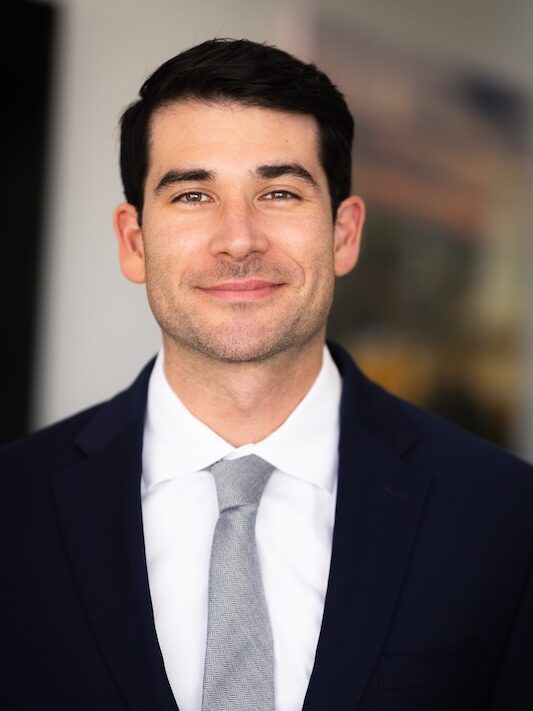
Pasadena, CA – May 13, 2026 – Inter-Con Security announces the promotion of David Oken to a new role as Chief People Officer.
Mr. Oken is responsible for all aspects of talent acquisition and retention strategy across the company’s global workforce. He joined Inter-Con in 2021 as Vice President of Corporate Talent and progressed through roles of increasing responsibility before being named to the Executive Leadership Team, a tenure that has coincided with one of the most significant growth periods in Inter-Con’s history.
“At Inter-Con, the company is only as good as the people. The engine of our business starts with recruiting and retention, and we are proud to have David lead that team,” said Henry Hernandez, President and CEO of Inter-Con Security.
Prior to joining Inter-Con, Mr. Oken served as Director of Client Services at Vaco, a national talent solution and recruiting firm. He holds a Bachelor of Arts in Psychology from the University of San Diego and is a graduate of UCLA Anderson’s Executive Education program.
View on PR Newswire.
About Inter-Con
Inter-Con is a global provider of fully customized, high-touch integrated security solutions. Inter-Con is a 100% Hispanic-owned, certified Minority Business Enterprise, and is the largest minority-owned and operated security company in the world, employing over 40,000 people across North and South America, and Africa.
Featuring Inter-Con Security Officers Jesse Jenson, Jeremy Jeffery, and Diego Hernandez
A person was down. Unconscious. Struggling to breathe.
When Inter-Con Officers Jesse Jenson, Jeremy Jeffery, and Diego Hernandez encountered the scene, their training took over instantly. Thanks to regular certifications in CPR, AED operation, and crisis response — the core foundation of all Inter-Con officer preparation — they knew exactly what to do. Within seconds, they were assessing the emergency, delivering chest compressions, deploying an AED, and coordinating with incoming EMS, all at once, all without hesitation.
This is what Inter-Con officers are built for.
“As a CPR instructor, this is exactly the outcome we train for. Immediate action, coordination, and confidence under pressure are all qualities that count when the stakes are high. These officers didn’t hesitate, and that’s what saves lives.”
— Carnell Marshall, Regional Operations Trainer, Inter-Con
Each officer moved with a purpose. One managed compressions. One operated the AED. One guided paramedics in. Roles were clear, communication was calm, and every action was deliberate. By the time EMS arrived, the team had already done what was needed — and stabilization was successful.
That kind of seamless coordination doesn’t happen by accident. Inter-Con officers train together regularly, learning not just individual skills but how to function as a unit under pressure. When it matters most, that shared preparation shows.
“These officers didn’t just respond to an emergency — they ran toward it, stayed calm, and brought someone back. That’s the kind of person we work hard to find, develop, and keep.”
— Jesus Garcia, Vice President of Operations, Inter-Con
At Inter-Con, we believe security is more than a post and a uniform. It’s a responsibility — to the people you protect, to your fellow officers, and to the communities you serve. Jesse, Jeremy, and Diego embodied that responsibility completely.
We’re proud to have them on our team.
Join a Team That Shows Up When It Matters
Stories like this happen because of the people behind the badge. If you’re ready to build a career with purpose, supported by world-class training and a team that has your back, Inter-Con offers more than a job—we provide real opportunities to grow, advance your skills, and chart your path in the security field. We’d love to hear from you.
👉 Explore Careers at Inter-Con
Looking for Security You Can Trust?
Inter-Con provides protection built on rigorous training, proven leadership, and officers who go above and beyond every shift and every site. Let’s talk about what we can do for your organization.
NEWS
May 1, 2026
Contact: [email protected]
Pasadena, CA – May 1, 2026 – Inter-Con Security announced today that President and CEO Henry Hernandez was honored last night at the 2026 Latino Leaders Index 500 Awards, accepting recognition on behalf of himself and his father, Rick Hernandez. The award recognizes both leaders for their contributions to building one of the largest and most prominent Latino-owned businesses in the United States. Inter-Con is ranked as the twenty-first largest Latino-owned business in the United States.
The Latino Leaders Index 500 represents an extraordinary effort to identify, research, and celebrate the nation’s top Latino-owned and operated businesses — measuring their impact by revenue, workforce, and leadership. Inter-Con’s inclusion at #21, with an annual revenue of $1.3 billion and a workforce of more than 40,000 individuals worldwide, reflects the company’s standing as one of the largest minority-owned enterprises in the country.
Together, Rick and Henry Hernandez represent the second and third generation of Hernandez family leadership that have shaped Inter-Con Security into the largest minority-owned and operated security company in the world — a legacy built on integrity, innovation, and an unwavering commitment to service, with operations spanning North America, South America, and Africa.
“This recognition reflects the work of thousands of Inter-Con security professionals whose dedication and commitment make this company what it is,” said Henry Hernandez. “Our family has poured everything into building this company, and it is an honor to carry that legacy forward. We are proud of our heritage, and our people, and proud to represent the strength of Latino-owned business in America.”
Inter-Con Security congratulates all honorees recognized at the 2026 Latino Leaders Index 500 ceremony and looks forward to continuing to raise the standard for excellence in the security industry.
Learn more about the 2026 Index 500 ranking here.
About Inter-Con
Inter-Con is a global provider of fully customized, high-touch integrated security solutions. Inter-Con is a 100% Hispanic-owned, certified Minority Business Enterprise, and is the largest minority-owned and operated security company in the world, employing over 40,000 people across North and South America, and Africa.
Human trafficking doesn’t happen in the dark. It happens in hotel lobbies, truck stops, shopping centers, and office buildings. It happens in places where security guards stand watch every day. That’s what makes their role so critical.
Defined by the use of force, fraud, or coercion to exploit individuals through commercial sex or forced labor, human trafficking is one of the most pervasive human rights violations of our time. According to the OCCRP, an estimated 50 million people worldwide are currently affected — men, women, and children of every background.
An on-duty guard can be the only person in a position to notice something is wrong.
What to Watch For
The U.S. Department of Homeland Security identifies several key behavioral and situational indicators. Knowing these signs could mean the difference between someone escaping or not.
The person in question may be a victim if they:
- Appear fearful, submissive, or show signs of physical abuse, malnourishment, or disorientation
- Are being thoroughly monitored by another individual, or are prevented from speaking for themselves
- Seems disconnected from family, friends, or any support network
- Cannot produce identification, lack personal belongings, or are being controlled by someone else who holds their ID, passport, or money
The location around you may be a site of trafficking if you notice:
- Unusual traffic patterns, such as frequent visitors entering and exiting at all hours with no clear purpose
These signs rarely appear in isolation. Rely on instincts. If something looks wrong, it probably is.
How to Respond
Do not attempt to intervene directly, as suspected traffickers can be dangerous. Your job is to observe, document, and report.
- Immediate threat: Call 911
- Suspicious activity: Contact the National Human Trafficking Hotline at 1-888-373-7888, or text HELP to 233733
- Immigration-related trafficking: Contact U.S. Immigration and Customs Enforcement (ICE) at 1-866-347-2423
Building a Stronger Response
In high-traffic environments like airports and commercial hubs, security personnel are uniquely positioned to recognize the subtle signs of human trafficking that others might overlook. Investing in training and fostering strong partnerships with law enforcement aren’t just best practices — they’re our responsibility and our opportunity to make a real difference.
— Joshua Ruiz, Senior Vice President, Operations, Inter-Con Security
Security teams that train for this, know the signs, practice the protocols, and build relationships with local law enforcement are far better equipped to act decisively when it counts.
You Are the First Line of Defense
Detecting the warning signs of human trafficking isn’t a specialized skill reserved for law enforcement. It’s something every trained security professional can and should be equipped to do. Because sometimes, the only thing standing between a victim and freedom is someone paying close enough attention.